Global heating may breach 1.5°C in 2024 – here’s what that could look like

Spread the love

Original article by Jack Marley republished from the Conversation under Creative Commons Attribution-No Derivatives licence.

Sunrise on Lake Michigan, US during a heatwave. August 2023. Antonio Perez/Chicago Tribune/TNS/Alamy Stock Photo

It’s official: 2023 was Earth’s hottest year ever recorded, beating the previous record set in 2016 by a huge margin. Last year was also the first in which the world was close to 1.5°C (1.48°C) hotter than the pre-industrial average (1850-1900). We are brushing against the threshold scientists urged us to limit long-term warming to.

Some scientists, including former Nasa climatologist James Hansen, predict 2024 will be humanity’s first year beyond 1.5°C. As what were once dire warnings from climate experts become our shared reality, what can you expect?

The 1.5°C temperature target, enshrined in the 2015 Paris agreement, is not shattered on first contact. Most of the climate tipping points scientists fear could send warming hurtling out of control are not expected until Earth is consistently warmer than 1.5°C. The global average temperature is likely to dip down again once the present El Niño (a warm phase in a natural cycle focused on the equatorial Pacific Ocean) dissipates.

Instead, 2024 could be our first glimpse of Earth at 1.5°C. Here’s what research suggests it will look like for people and nature.

Ecosystems on the brink

Tropical coral reefs are in hot water. These habitats comprise a network of polyp-like animals (related to jellyfish) and colourful algae encased in calcium carbonate. The complex forms they build in shallow water around the Earth’s equator are thought to harbour more species than any other ecosystem.

“Corals have adapted to live in a specific temperature range, so when ocean temperatures are too hot for a prolonged period, corals can bleach – losing the colourful algae that live within their tissue and nourish them via photosynthesis – and may eventually die,” say coral biologists Adele Dixon and Maria Beger (University of Leeds) and physicists Peter Kalmus (Nasa) and Scott F. Heron (James Cook University).

Coral bleaching, once rare, now occurs on an almost annual basis. Damsea/Shutterstock

Climate change has already raised the frequency of these marine heatwaves. In a world made 1.5°C hotter, 99% of reefs will be exposed to intolerable heat too often for them to recover according to Dixon’s research, threatening food and income for roughly one billion people – not to mention biodiversity.

Coral reefs will earn their reputation as the “canaries in the coal mine” for climate change’s impact on the natural world. As global heating ticks up towards 2°C, the devastation already seen on reefs will become evident elsewhere according to an analysis by biodiversity scientist Alex Pigot at UCL:

“We found that limiting global warming to 1.5°C would leave 15% of species at risk of abruptly losing at least one third of their current geographic range. However, this doubles to 30% of species on our present trajectory of 2.5°C of warming.”

Heat beyond human tolerance

Above 1.5°C, humanity risks provoking heatwaves so intense they defy the human body’s capacity to cool itself.

Intense heat and humidity have rarely conspired to create “wetbulb” temperatures of 35°C. This is the point at which the air is too hot and humid for sweating to cool you down – different from the “drybulb” temperature a thermometer reports.

Earth’s rising temperature could soon change that according to climate scientists Tom Matthews (Loughborough University) and Colin Raymond (California Institute of Technology).

“Modelling studies had already indicated that wetbulb temperatures could regularly cross 35°C if the world sails past the 2°C warming limit … with The Persian Gulf, South Asia and North China Plain on the frontline of deadly humid heat,” they say.

A relief camp for heat stroke in Hyderabad, Pakistan, May 2023. Owais Aslam Ali/Pakistan Press International (PPI)/Alamy Stock Photo

But different areas of the the world are warming at different rates. In a world that is 1.5°C hotter on average, temperatures in your local area may have actually risen by more than that.

To account for this, Matthews and Raymond studied records from individual weather stations worldwide and found that many sites were closing in much more rapidly on the lethal heat and humidity threshold.

“The frequency of punishing wetbulb temperatures (above 31°C, for example) has more than doubled worldwide since 1979, and in some of the hottest and most humid places on Earth, like the coastal United Arab Emirates, wetbulb temperatures have already flickered past 35°C,” they say.

“The climate envelope is pushing into territory where our physiology cannot follow.”

How long do we have?

Species extinctions and deadly heat become more likely after 1.5°C. So do catastrophic storms and collapsing ice sheets.

For a chance to avoid these horrors, we must eliminate the greenhouse gas emissions heating Earth and that means rapidly phasing out coal, oil and gas, which account for 80% of energy use worldwide.

Will carbon emissions from fossil fuels keep growing in 2024? TTstudio/Shutterstock

How fast? According to the latest estimate, published in October, very fast indeed.

“If humanity wants to have a 50-50 chance of limiting global warming to 1.5°C, we can only emit another 250 gigatonnes (billion metric tonnes) of CO₂,” say climate and atmospheric scientists Chris Smith at the University of Leeds and Robin Lamboll at Imperial College London.

“This effectively gives the world just six years to get to net zero.”

Original article by Jack Marley republished from the Conversation under Creative Commons Attribution-No Derivatives licence.

Continue ReadingGlobal heating may breach 1.5°C in 2024 – here’s what that could look like

2023 was deadliest year for Palestinians in the West Bank since 2005

Spread the love

Original article by Abdul Rahman republished from peoples dispatch under a Creative Commons Attribution-ShareAlike 4.0 (CC BY-SA) license.

Israeli occupation forces obstructing the work of ambulances in Jenin. (Photo: Mohammad Mansour/WAFA)

Over 500 Palestinians were killed in the West Bank in 2023. Under its undeclared policy of collective punishment, Israel also destroyed a significant amount of civilian infrastructure such as roads, residential buildings, and hospitals in West Bank since October 7

Israel’s war on Gaza has entered its fourth month. It has killed over 23,000 Palestinians in the besieged enclave and injured around 60,000. Nearly 80% of all Gazans have been displaced due to the constant bombings. The amount of destruction and killing in Gaza is horrendous. The offensive has also extended to the West Bank where Palestinians have been facing a form of undeclared collective punishment both before and since the war in Gaza.  

Though the West Bank has always faced violent attacks from Israeli occupation, those attacks have increased manifold since the beginning of the war in Gaza. Despite the fact that Hamas does not rule the territory, Israel used the excuse of Operation Al-Aqsa Flood to justify its unprecedented attacks on civilians and their infrastructure there. 

Between October 7 and December 31, last year more than 340 Palestinians, including a large number of children, were killed in attacks carried out by both the Israeli forces and illegal settlers. 

The Israeli attacks targeted Palestinian civilians, including artists from the famous Freedom Theater, while homes were demolished, hospitals and medical facilities targeted, and roads and other civilian infrastructure uprooted.  

At least three Palestinian men were shot and killed by the occupying Israeli forces during the intervening period of Monday evening and Tuesday night in Tulkarm. Video footage of these attacks showed Israeli forces first shooting and killing the men and then running over the bodies of one of them with their military vehicle.

Israeli forces reportedly conducted similar night raids in Qalqilya, Nablus, Ramallah, and Bethlehem, among several other places on Tuesday night, arresting scores of people and destroying civic infrastructure.

Israeli occupation is targeting the Palestinians in the West Bank economically as well by refusing to transfer millions of dollars in tax revenue to the Palestinian Authority, leaving it with no money to pay the salaries to its over 140,000 employees. It has also refused to allow around 150,000 workers from the territory to return to their jobs in Israel since October 7.  

Deadliest Year since 2005

Israeli forces similarly attacked the Jenin refugee camp a couple of days ago and killed at least 7 Palestinians. They have targeted the camp repeatedly since October 7, killing over 60 Palestinians there and deliberately destroying most of the roads and other civil infrastructure. According to Al-Jazeera, Tulkarm too has been a center of Israeli attacks with at least 60 Palestinians killed since October 7.

In August, the UN had already declared 2023 to be the deadliest year for the West Bank as the number of Palestinians killed in Israeli attacks had crossed 200, more than the previous high of 167 in 2022.

According to the latest data, the total number of Palestinians killed in 2023 has crossed 500 with over 13,000 more injured in the attacks carried out by both illegal settlers as well as Israeli soldiers.

More than 70 of the Palestinians killed in Israeli attacks were children. This is the highest number of the Palestinian children ever killed in the occupied West Bank in a year. Some sources say the death toll among children is even higher.

Settler Violence

According to Israeli human rights organization Yesh Din, 2023 was also the most violent year for the Palestinians in the occupied West Bank in terms of the number of attacks carried out by the illegal settlers. According to it, at least 10 Palestinians were killed in 2023 just in those attacks.

According to the UN Office for the Coordination of Humanitarian Affairs (OCHA), at least 1,225 cases of settler violence were recorded in 2023.

The figure presented by the Palestinian officials for the same is almost double at 2,410. It also claims that the number of Palestinians killed in settler violence in 2023 was 22.

There are around 500,000 Israeli settlers living illegally inside the occupied West Bank. Most of these illegal settlers participate in attacks on nearby Palestinian villages under security cover provided by the Israeli occupation forces.

The settlers attack the villages, burn Palestinian houses, their farms and other properties, and attack people trying to prevent those attacks with the objective of terrorizing people to leave their villages and farms.

Record number of Palestinians detained

More than 11,000 Palestinians were also arrested or detained by Israel in the last year in the occupied West Bank alone, which is almost three times higher than the total number of Palestinians inside Israeli prisons before the beginning of the year.

Some of them were later released after a brief period of detention. Some others were released as part of the prisoner exchange deal between Hamas and Israel. Still the number of Palestinian prisoners inside Israeli jails has jumped from around 4,500 before the beginning of the year to over 7,000 at the end of it.

joint statement issued by Detainees and Ex-Detainees Affairs Commission, the Palestinian Prisoners Society, Addameer, and others stated that 1,085 of those detained by the Israeli occupation forces from the West Bank in 2023 were children.

As per reports, scores of Palestinian prisoners have been killed inside Israeli jails with large number of them reporting torture and abuse by the prisoner authorities.

Original article by Abdul Rahman republished from peoples dispatch under a Creative Commons Attribution-ShareAlike 4.0 (CC BY-SA) license.

Continue Reading2023 was deadliest year for Palestinians in the West Bank since 2005

2023 Destroys Global Heat Record as Fossil Fuel Emissions Boil the Planet

Spread the love

Original article by JAKE JOHNSON republished from Common Dreams under Creative Commons (CC BY-NC-ND 3.0).

Indonesian firefighters work to extinguish a wildfire in Ogan Ilir, Indonesia on September 14, 2023.  (Photo: Muhammad A.F/Anadolu Agency via Getty Images)

“How many more records does it take before we phase out fossil fuels and deal with it?” asked one climate campaigner.

European scientists officially confirmed Tuesday that 2023 was the hottest year on record, surpassing 2016 by a huge margin as greenhouse gas emissions from fossil fuels continue to drive global temperatures to terrifying new highs.

The conclusion from the European Union’s Copernicus Climate Change Service was hardly unexpected given the unparalleled heatwaves that gripped large swaths of the planet last year, ushering in what the head of the United Nations called “the era of global boiling.”

Last year’s global average temperature was 14.98°C, 0.17°C warmer than 2016, 0.60°C warmer than the 1991-2020 average, and 1.48°C warmer than the 1850-1900 pre-industrial level, according to Copernicus.

“2023 was an exceptional year with climate records tumbling like dominoes,” said Copernicus deputy director Samantha Burgess. “Not only is 2023 the warmest year on record, it is also the first year with all days over 1°C warmer than the pre-industrial period. Temperatures during 2023 likely exceed those of any period in at least the last 100,000 years.”

Liz Bentley, chief executive of the U.K.’s Royal Meteorological Society told CNN on Tuesday that after last year’s record-shattering summer, scientists predicted that global warming would reach around 1.3°C above pre-industrial levels.

That projection, Bentley said, has been “annihilated” by the new Copernicus data, which shows that planetary warming is perilously close to the Paris accord’s 1.5°C target.

“If you look at climate projections, when we expect to see temperature changes of close to 1.5°C, indeed it has come sooner than many would have expected,” Bentley added. “We’ve definitely seen an acceleration towards that, rather than it being a kind of linear progression. It feels like it’s rising much more exponentially.”

Scientists expect 2024 to be even hotter than last year, raising the stakes for badly lagging global efforts to rein in planet-warming fossil fuel production, which in 2023 hit record levels in the United States—the largest historical contributor to greenhouse gas emissions.

“How many more records does it take before we phase out fossil fuels and deal with it?” asked climate campaigner Mike Hudema.

Copernicus director Carlo Buontempo said in a statement Tuesday that “the extremes we have observed over the last few months provide a dramatic testimony of how far we now are from the climate in which our civilization developed.”

“This has profound consequences for the Paris Agreement and all human endeavors,” said Buontempo. “If we want to successfully manage our climate risk portfolio, we need to urgently decarbonize our economy whilst using climate data and knowledge to prepare for the future.”

Original article by JAKE JOHNSON republished from Common Dreams under Creative Commons (CC BY-NC-ND 3.0).

Continue Reading2023 Destroys Global Heat Record as Fossil Fuel Emissions Boil the Planet

Climate scientists hail 2023 as ‘beginning of the end’ for fossil fuel era

Spread the love

https://www.theguardian.com/environment/2023/dec/30/climate-scientists-hail-2023-as-beginning-of-the-end-for-fossil-fuel-era

Cautious optimism among experts that emissions from energy use may have peaked as net zero mission intensifies

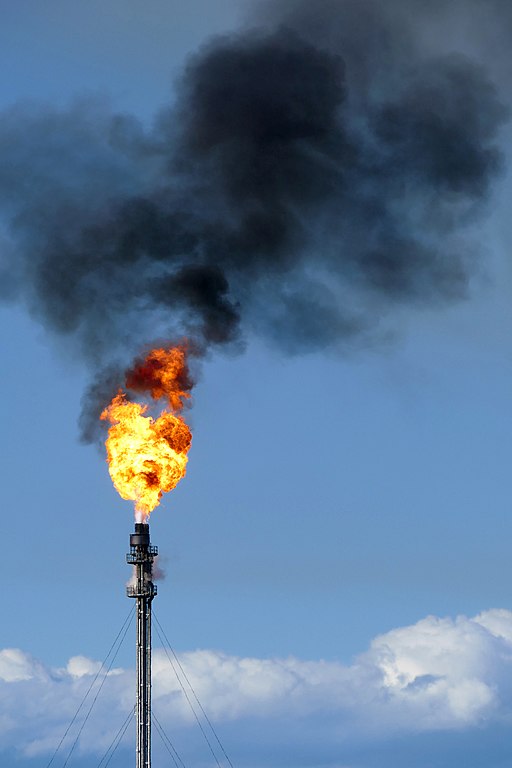
Image of gas flaring. CC.
Fossil fuel emissions from gas, oil and coal plants will have peaked by 2030, according to the International Energy Agency. Image of gas flaring. CC.

https://www.theguardian.com/environment/2023/dec/30/climate-scientists-hail-2023-as-beginning-of-the-end-for-fossil-fuel-era

Global efforts to slow a runaway climate catastrophe may have reached a critical milestone in the last year with the peak of global carbon emissions from energy use, according to experts.

A growing number of climate analysts believe that 2023 may be recorded as the year in which annual emissions reached a pinnacle before the global fossil fuel economy begins a terminal decline.

The milestone is considered a crucial tipping point in the race to drive emissions to net zero. But for many climate experts it’s an inflexion point that was due years ago and which, although encouraging, falls far short of the rapid reduction the world needs.

The world’s leading climate scientists have consistently warned that the buildup of carbon dioxide in the Earth’s atmosphere means it is critical to drive down emissions before 2030 if leaders hope to keep global heating to a maximum of 1.5C above pre-industrialised levels. The rate at which emissions would need to be reduced will require, most experts agree, global transformation on a scale not yet in the pipeline.

“We can take a small pause to celebrate this tipping point,” said Dave Jones, a director at the climate thinktank Ember. “But in a way it’s worrying that we are still talking about when emissions might peak. The reality of the situation is that we need deep and fast reductions in emissions if we hope to stay within the vanishingly small budget for carbon which remains.”

The International Energy Agency (IEA) raised hopes earlier this year of an end to the fossil fuel era when it predicted for the first time that the consumption of oil, gas and coal would peak before 2030 and begin to fall as climate policies took effect.

“It’s not a question of ‘if’, it’s just a matter of ‘how soon’ – and the sooner the better for all of us,” said Fatih Birol, the head of the IEA.

https://www.theguardian.com/environment/2023/dec/30/climate-scientists-hail-2023-as-beginning-of-the-end-for-fossil-fuel-era

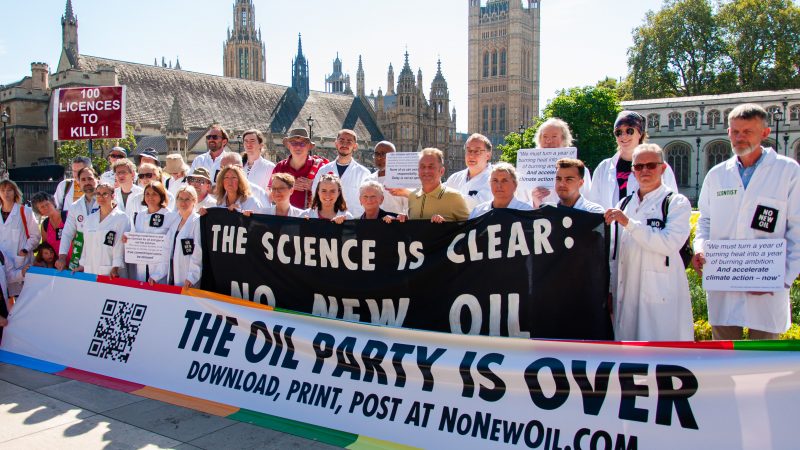
Scientists protest at UK Parliament 5 September 2023.

dizzy: I’m expecting huge disinvestment and consequent disempowerment of the fossil fuel sector. The longer investors stay in fossil fuels, the larger their lossses will be. later elaboration: Plutocrats are losing control of the narrative, activists are aware of and highlighting huge fossil fuel subsidies and fossil fuel lies like CCS, renewables becoming much cheaper, court cases, greater acceptance and recognition of role of fossil fuels in destroying the planet, green parties achieving much higher vote share, it’ll hit the fan. later still elaboration: All the increasingly extreme and more often weather events that we’re experiencing attributed to fossil fuels caused climate crisis.

Continue ReadingClimate scientists hail 2023 as ‘beginning of the end’ for fossil fuel era

World will look back at 2023 as year humanity exposed its inability to tackle climate crisis, scientists say

Spread the love
Scientists protest at UK Parliament 5 September 2023.

https://www.theguardian.com/environment/2023/dec/29/world-will-look-back-at-2023-as-year-humanity-exposed-its-inability-to-tackle-climate-crisis

The hottest year in recorded history casts doubts on humanity’s ability to deal with a climate crisis of its own making, senior scientists have said.

As historically high temperatures continued to be registered in many parts of the world in late December, the former Nasa scientist James Hansen told the Guardian that 2023 would be remembered as the moment when failures became apparent.

“When our children and grandchildren look back at the history of human-made climate change, this year and next will be seen as the turning point at which the futility of governments in dealing with climate change was finally exposed,” he said.

“Not only did governments fail to stem global warming, the rate of global warming actually accelerated.”

After what was probably the hottest July in 120,000 years, Hansen, whose testimony to the US Senate in 1988 is widely seen as the first high-profile revelation of global heating, warned that the world was moving towards a “new climate frontier” with temperatures higher than at any point over the past million years.

Now director of the climate programme at Columbia University’s Earth Institute in New York, Hansen said the best hope was for a generational shift of leadership.

“The bright side of this clear dichotomy is that young people may realise that they must take charge of their future. The turbulent status of today’s politics may provide opportunity,” he said.

Hottest 12 months in 125,000 years – how extreme weather broke more records in 2023

Severe conditions brought turmoil across the world, impacting small towns and major cities, as storms, heatwaves, floods, and droughts claimed many lives and destroyed communities.

Weather of 2023

Continue ReadingWorld will look back at 2023 as year humanity exposed its inability to tackle climate crisis, scientists say