United Nations • Climate change refers to long-term shifts in temperatures and weather patterns. Human activities have been the main driver of climate change, primarily due to the burning of fossil fuels like coal, oil and gas.
Conservative leader Kemi Badenoch has described her plan to “maximise extraction” of the UK’s oil and gas from the North Sea as a “common sense” energy policy.
Politicians are using language like this increasingly often – calling themselves “pragmatic” on climate change and invoking “common sense”. It sounds reasonable, reassuring, and grownup – the opposite of “hysterical” campaigners or “unrealistic” targets.
But new research my colleagues and I conducted, calling on a decade of interviews with UK MPs, shows that political “pragmatism” is fast becoming a dangerous form of climate delay. By framing urgent action as “extreme” and steady-as-she-goes policies as “pragmatic”, leaders across the political spectrum are protecting the fossil-fuel status quo at the very moment scientists warn we need rapid, transformative change.
Badenoch’s latest intervention is a perfect example. She said “common sense” dictates that every drop of oil must be extracted from the North Sea, and that net zero by 2050 was a policy pushed by “bullies”. This came just a day after the UK Met Office declared summer 2025 as the hottest on record.
We found that members of parliament deploy the same language of pragmatism to defend fossil fuel companies and to insist to their constituents that nothing needs to change too fast. The paradox, of course, is that more urgent social and economic change is precisely what the world’s climate scientists say is necessary to avert climate breakdown.
In our recent interviews with politicians, MPs from across the political spectrum tended towards gradual change in order to maintain political and public support. One said:
First and foremost be pragmatic. Accept incremental change, because incremental change often accelerates, but you take people with you. If you didn’t take people with you, you’ll start getting resistance.
Another MP contrasted a pragmatic approach with the calls from some campaign groups for more rapid action:
There are campaigns that say we’ve got to be net zero by 2025, or 2030. [laughing incredulously] … do you realise what the consequences of that will be … you’d have a revolution in Britain if you tried to do that, in terms of destroying people’s quality of life.
Interestingly, despite rejecting more ambitious targets, later in the interview the same MP acknowledged that faster change was needed:
We need to do more, we could do more, we are, you know, I’m sure the government will do more. I’m certainly pushing it to do more. But fundamentally we’ve halved our emissions since 1990.
Here we see the nuance, and the danger, of the language of pragmatism. It allows politicians to hold two positions at once. They can acknowledge the need for rapid change, while promoting a “pragmatic” position against it.
The calls for pragmatism appeared to stem from MPs’ desire to present a reasoned and rational case for climate action that does not impinge on constituents’ lives. They also used pragmatism to distance themselves from arguments they portrayed as “extreme” or “shrill”.
The flawed assumption underlying these calls to pragmatism is that the public will not support ambitious, transformative climate policies. We concluded that whereas a few years ago MPs promoted climate policies “by stealth”, meaning they did it on the quiet, now they turn to ideas of pragmatism in an attempt to maintain a fragile political consensus in favour of net zero – a consensus that is already fracturing.
Top-down pragmatism
This turn to pragmatism can now be seen at the very top of British politics, threatening the UK’s steady ratcheting up of climate ambition to date.
Former Labour prime minister Tony Blair recently wrote in the Blair Institute’s report on climate change: “People know that the current state of debate over climate change is riven with irrationality.”
Blair then asserted: “Any strategy based on either ‘phasing out’ fossil fuels in the short term or limiting consumption is a strategy doomed to fail.” This is despite the widespread consensus among scientists that both phasing out fossil fuels and reducing consumption of at least some products are essential.
The report goes on to say: “A realistic voice in the climate debate is required, neither ideological nor alarmist but pragmatic.” This language is intended to sound rational, reasonable and even scientific. The problem is that it can be used to justify actions that appear to ignore what the science is telling us.
Former Conservative prime minister Rishi Sunak warned against treating climate change as an “ideology” . Notably, Sunak referred to “pragmatic, proportionate, and realistic” climate action shortly after his government announced hundreds of new licences for oil and gas fields in the North Sea.
His message coincided with ongoing road-building programmes, plans for airport expansion, and insufficient action to insulate the UK’s housing stock, all of which could jeopardise the UK’s climate targets. Again we see the language of pragmatism working against the rapid societal changes that are necessary.
The pragmatic road ahead
In general, the MPs we spoke to were not using pragmatism in bad faith. Rather it was a way of navigating the complexities of climate politics where the huge changes demanded by climate mitigation are deemed too challenging to sell to constituents. But this political strategy is a very risky one and underestimates the public’s appetite for “strong and clear” climate leadership from government.
The current government is already struggling to reconcile net zero commitments with its economic growth agenda, which includes a new runway at Heathrow airport. Not only is prime minister Keir Starmer facing divisions within the ruling Labour party over net zero ambitions, he is also dealing with increasingly prominent net zero scepticism from the leaders of the Conservative and Reform parties.
The political language of “pragmatism” therefore risks spreading from Badenoch to Starmer, becoming a discourse of delay that promotes non-transformative solutions.
Want more politics coverage from academic experts? Every week, we bring you informed analysis of developments in government and fact check the claims being made.
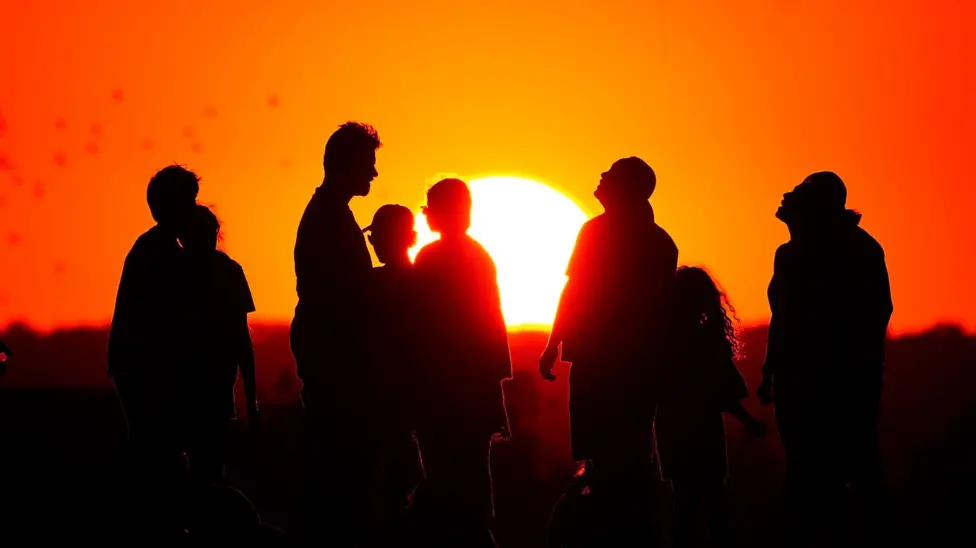
The United Kingdom has “almost certainly” had its hottest summer on record, according to provisional statistics from the Met Office.
The mean temperature across the country – which includes overnight lows as well as daytime highs – currently stands at 16.13C (61.03F) with less than a week of the season left to run.
This is well ahead of 2018, the previous warmest summer, which had a mean temperature of 15.76C (60.37F).
Temperatures during the rest of August would need to be four degrees below normal to prevent the record being broken – and this does not seem likely.
Elon Musk urges you to be a Fascist like him, says that you can ignore facts and reality then.Donald Trump urges you to be a Climate Science denier like him. He says that he makes millions and millions for destroying the planet, Burn, Baby, Burn and Flood, Baby, Flood.Nigel Farage urges you to ignore facts and reality and be a climate science denier like him. He says that Reform UK has received millions and millions from the fossil fuel industry to promote climate denial and destroy the planet.
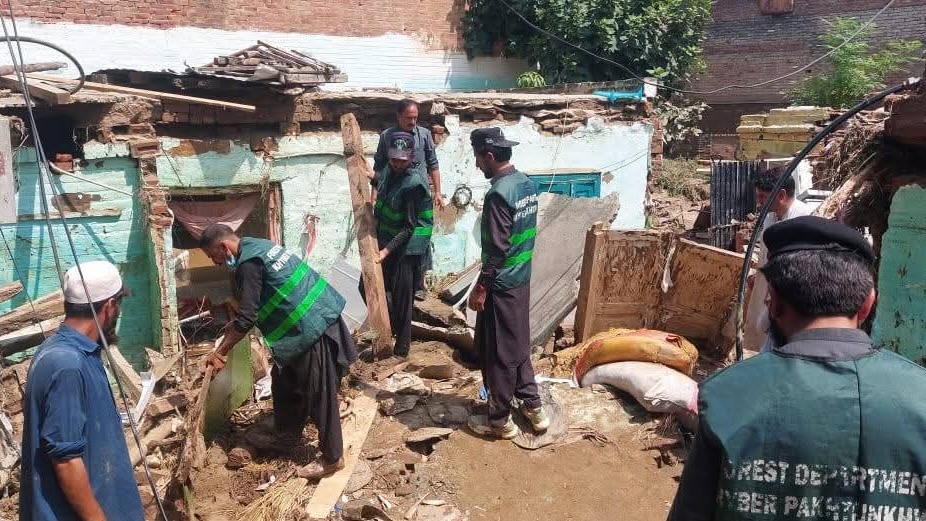
The Lower Swat Forest Division team of the Forest Department is engaged in rescue and relief activities in the flood-affected areas of Mingora, KP. Photo: Pir MusavirPTI/X
Pakistan has witnessed frequent heavy rains and floods in recent times causing massive human and material loss claimed to be the result of human-induced global changes in the climate
Pakistan is yet again facing heavy casualties and massive destruction due to unusual heavy rains and floods across the country this year. According to the country’s National Disaster Management Authority (NDMA), more than 650 people have been killed and over 900 others have been injured in rain-related incidents across the country since June 26.
The flash floods in mostly the northeastern parts of the country have also displaced hundreds of thousands with scores still reported missing.
It is estimated that Pakistan has already received 50% more rain this year in comparison to last year. The country’s meteorological department has warned that the current spell of heavy rains is expected to last until August 19 with three more spells of heavy rains through September after that.
The upcoming spells may cause massive flooding in the areas along the Indus river in the coming days, Pakistani authorities have warned.
Though death and destruction from the floods have been recorded across all the provinces of Pakistan, including the capital Islamabad, the northeastern Khyber Pukhtunkhwa (KP), and Gilgit-Baltistan have been hit the hardest.
Last week, huge flash floods washed away villages and communication networks at various places in the hilly region of KP and Gilgit-Baltistan. Heavy rains and cloud bursts have destroyed roads, railway lines, schools, hospitals, and other essential civilian infrastructure in KP, Gilgit-Baltistan, and other parts of Pakistan.
Buner in KP, which witnessed a cloud burst last week, has been the hardest-hit district, amassing more than half of all deaths recorded in the province with scores of people still missing.
According to the NDMA, KP recorded the highest number of people killed at 390, followed by Punjab, Pakistan’s largest province, which has recorded 164 deaths. Even the drier regions such as Balochistan have recorded over a dozen deaths due to the heavy rain and flash flooding.
Fresh heavy rains on Monday have made the relief and rescue operations difficult, particularly in the most affected regions in the hills.
Effects of climate change
Residents in Pakistan’s hilly areas who lost their houses in the flash floods say there were no early warnings of the heavy rains which multiplied the loss of lives and property.
Inam Haider Malik, head of the NDMA, claimed in a press conference in Islamabad on Sunday that it is difficult to predict cloud bursts and flash floods and warned that at least three more spells of heavy rain in the coming days may cause flooding in the lower areas in Pakistan. He emphasized that the “scale of loss is part of the climate change impacts”.
Pakistan’s chief meteorologist Zaheer Babar also claimed that the unusually heavy rains are a result of climate change. However, he also underlined that the impact of erratic rain is multiplied due to haphazard construction near the river valleys and unscientific disposal of waste in the river beds, Geo Tvquoted Babar saying.
“The situation in Khyber Pukhtunkhwa and Gilgit Baltistan is devastating. We are in the midst of a climate emergency,” claimed Ammar Ali Jan, leader of the Haqooq-e-Khalq Party (HKP). In his posts on X, Ammar also demanded “Pakistan should receive climate reparations, including debt relief” as it is a victim of “fossil-fuel driven model of Western development.”
Taimur Rahman, leader of the Mazdoor Kisan Party (MKP), underlined the failure of the Pakistani state to treat all its citizens equally, resulting in disproportionate losses to the poor during such floods.
Taimur claimed that the government in the country uses most of its resources on developing flood preventive mechanisms around richer localities while ignoring the needs of the majority of people.
Pakistan has faced repeated floods in the last few years with an increase in the overall rainfall during the monsoon season in particular. In 2022, in a similar situation, floods killed over 1,700 across Pakistan and affected over 33 million people, badly impacting the peoples livelihoods and the overall economy of the country as it tried to recover from the effects of COVID-19. The floods also destroyed crops, intensifying the overall food insecurity in the country.
Donald Trump urges you to be a Climate Science denier like him. He says that he makes millions and millions for destroying the planet, Burn, Baby, Burn and Flood, Baby, Flood.Nigel Farage urges you to ignore facts and reality and be a climate science denier like him. He says that Reform UK has received millions and millions from the fossil fuel industry to promote climate denial and destroy the planet.
“In a landmark ruling today the ICJ has made clear that failure to take decisive action to protect the climate, through continued fossil fuel production and consumption and granting fossil fuel exploration licences, can be considered as acting ‘wrongfully’. This means the UK has a legal duty to speed up the transition towards a cleaner, greener economy and block any new licences for the extraction of fossil fuels.
“The ruling also made clear that human rights must be at the heart of climate action because climate breakdown affects our rights to health, homes, and livelihoods.
“The court has recognised that rich countries like the UK, responsible for ongoing and historic pollution, have a special responsibility to act, and to offer compensation to countries and communities already suffering from floods, droughts, and rising sea levels.
“Today’s ruling should be the moment we draw a line. Governments that fail to act and polluters that refuse to clean up their act must no longer be allowed to harm communities either at home or across the globe with impunity.”