This work by Middle East Monitor is licensed under a Creative Commons Attribution-NonCommercial-ShareAlike 4.0 International License.
People displaced from El Fasher and other conflict-affected areas are settled in the newly established El-Afadh camp in Al Dabbah, in Sudan’s Northern State, on November 09, 2025. [Stringer – Anadolu Agency]
The EU on Tuesday warned that Sudan is facing a “catastrophic” humanitarian crisis, urging all parties to grant unhindered humanitarian access and resume negotiations for an immediate ceasefire, Anadolu reports.
Addressing the European Parliament’s plenary session in Strasbourg, the EU commissioner for equality and acting commissioner for crisis management, Hadja Lahbib, said hunger, malnutrition, and disease are rapidly spreading across the country, while international humanitarian law is being violated.
Lahbib described the situation in Darfur and Kordofan as “particularly shocking,” recalling last month’s “horrific attacks” against civilians by the paramilitary Rapid Support Forces (RSF) during their capture of El-Fasher and Bara.
“Thousands of civilians in El-Fasher have been killed on ethnic grounds, in house-to-house raids, mass detentions. People (are) unable to leave the city,” she said.
The commissioner noted that the RSF continues to block humanitarian assistance, further shrinking the humanitarian space in Sudan.
Since the conflict erupted in April 2023, more than 120 aid workers have been killed, making Sudan “one of the deadliest places in the world” for humanitarian staff.
Lahbib stressed that 21 million people face acute food insecurity, according to the latest assessment by the UN-backed Integrated Food Security Phase Classification, and warned that bureaucratic hurdles continue to obstruct aid operations.
She recalled that EU foreign ministers last week adopted sanctions against the RSF’s second-in-command, Abdelrahim Dagalo, for human rights violations and reiterated the bloc’s call for full accountability for atrocities committed in the country.
Lahbib also stressed the need for diplomatic engagement with regional actors to apply pressure on the warring sides.
“Considering the work of Kuwait, UAE, Egypt, Saudi Arabia, and the US, we have to take into account all interests and regional actors, including Türkiye,” she noted.
“Sudan has become a living nightmare for its people and a humanitarian catastrophe,” she said, adding that supporting humanitarian efforts in the country remains a priority for the European Commission.
Separately, the EU and the African Union condemned the atrocities committed by the RSF following their capture of the city of El-Fasher, and urged an immediate end to the conflict in Sudan.
Since April 2023, the Sudanese army and the RSF have been locked in a war that regional and international mediations have failed to end. The conflict has killed thousands of people and displaced millions of others.
This work by Middle East Monitor is licensed under a Creative Commons Attribution-NonCommercial-ShareAlike 4.0 International License.
The UK has announced much harsher rules for asylum seekers including the prospect of more deportations for those whose applications fail. The US is trebling the size of its deportation force. The EU is doubling its border budgets. And in the coming decades, hundreds of millions of people might be displaced by ecological changes.
In the face of this challenge, those countries which are most responsible for climate change have two options. Either they can share resources more equitably, and fund adaptation plans on a massive scale. Or they can prevent others from accessing resources and liveable land through physical and regulatory walls, enforced through mass deportation.
Recent events show that, faced with this choice, many governments are choosing not to share resources to anywhere near the extend needed, and are instead building higher walls.
Climate change is already making life unliveable in some parts of the world. According to a 2020 report from thinktank the Institute for Economics and Peace (IEP), 2.6 billion people face high or extreme water stress. By 2040, this may jump to 5.4 billion. Droughts, heatwaves, floods, cyclones, food shortages and related conflicts will force millions from their homes.
Most of these people will move internally within nations, but this too is likely to mean more walls and borders. In very unequal countries, internal migration has already triggered security-driven responses, with a rise in gated communities and other segregated living arrangements to keep the poorer away from the wealthy.
Many other climate migrants will be pushed to travel internationally. It’s likely their motivation will be characterised by many as economic rather than due to climate change. But it’s misleading to separate “economic” from “climate” migrants. When drought kills crops in Somalia or floods wash away farmland in Pakistan, the loss of income is inseparable from the climate shocks that caused it.
Even before the worst impacts hit, climate change is already woven into the economic pressures that push people to move – shrinking harvests, emptying wells and ruining livelihoods. The most severe climate-driven displacement is still ahead, but it has already begun.
Importantly, these pressures come with inequalities in causing climate change and bearing the costs. The richest 1% of the world’s population produces as much carbon as the poorest two-thirds, according to a study of global emissions in 2019 by Oxfam. Northern Europe and the US alone account for 92% of historical emissions.
Those who have contributed the least to climate change are the worst affected and often have the fewest resources to adapt, forcing many people to migrate.
More walls, more deportations
In this context, governments of wealthier countries are massively increasing spending on migration policing. In the US, proposed funding levels are extraordinary.
Recent legislation allocates nearly US$30 billion (£22 billion) to the Immigration and Customs Enforcement agency (Ice) for enforcement and deportation operations – roughly three times its current budget.
The US has also authorised US$45 billion for new detention centres – a 265% increase, more than the entire defence budget of Italy – and US$46.6 billion for additional border walls. Under this plan, Ice would become the largest US law enforcement agency, three times the size of the FBI.
Donald Trump’s policies can be easily labelled as the excess of one would-be autocrat, but this is a global trend across the political spectrum, albeit implemented with more acceptable language by the centre-left.
Introducing the UK Labour government’s new asylum and returns policy, Prime Minister Keir Starmer said: “We need an approach with a stronger deterrent effect and rules that are robustly enforced.” But previously-supportive MPs from his own party have warned this will mean “Ice-style raids” to deport asylum seekers.
The European Commission’s 2028–34 budget proposal earmarks €25.2 billion (£21.7 billion) for border management and €12 billion for migration, plus €11.9 billion for the Frontex border agency – more than double its current resources.
All this effectively triples current migration and border spending. In 2024, the EU ordered 453,000 non-EU nationals to leave, and actually deported 110,000 of them.
This is part of a much wider pattern, with borders today being far more militarised than at the end of the cold war. After decades of globalisation, states are now reterritorialising, building armoured fortifications against unwanted flows.
In the past two decades, more than 70 new international barriers have gone up, including Poland’s barbed-wire fence with Belarus, Greece’s steel wall on the Turkish border, Turkey’s stone wall on its Iranian border, and the new sections of the infamous wall between the US and Mexico.
Israel has built an “iron wall” around Gaza and border fences through much of the West Bank. Supposedly built to prevent Palestinians moving into Israel, these barriers have become a clear example of migration control tied to power grabs for land and resources.
A crossroads for human rights
Resource-driven migration pressures are rising just as the world is hardening its borders. In July 2025, the International Court of Justice declared that countries have a legal responsibility to address and compensate for climate change – and can be held accountable for their emissions. It is another signal that as humanity, we are at a crossroads.
The world can either prioritise universal human rights by sharing resources. Or it can attempt to protect a small, wealthy minority through walls, mass deportations and border violence on an unprecedented scale.
Keir Starmer refuses to be outcnuted by Nigel Farage’s chasing the racist bigot vote.Climate science denier Nigel Farage explains that it’s simple to blame asylum-seekers or Muslims for everything.
This work by Middle East Monitor is licensed under a Creative Commons Attribution-NonCommercial-ShareAlike 4.0 International License.
European Union flags are seen waving outside the EU Commission Building in Brussels, Belgium. [Dursun Aydemir/Anadolu Agency]
A human rights watchdog accused the EU on Thursday of evading its international obligations on the “grave crimes committed by Israel in the Gaza Strip,” Anadolu reports.
The EU is “proposing only selective and fragmented measures that fail to utilise its real leverage tools against Israel,” Geneva-based Euro-Med Human Rights Monitor said in a statement on US social media platform X.
It also criticized the bloc’s approach to humanitarian access for Palestinians in the besieged enclave.
“Less than two months ago, the EU merely ‘monitored Israel’s compliance’ with a recent agreement aimed at improving humanitarian aid access to Gaza, a deal that Israel has failed to implement,” it added.
Israel’s Gaza offensive has killed at least 64,600 Palestinians since October 2023. The military campaign has devastated the enclave, which is facing famine.
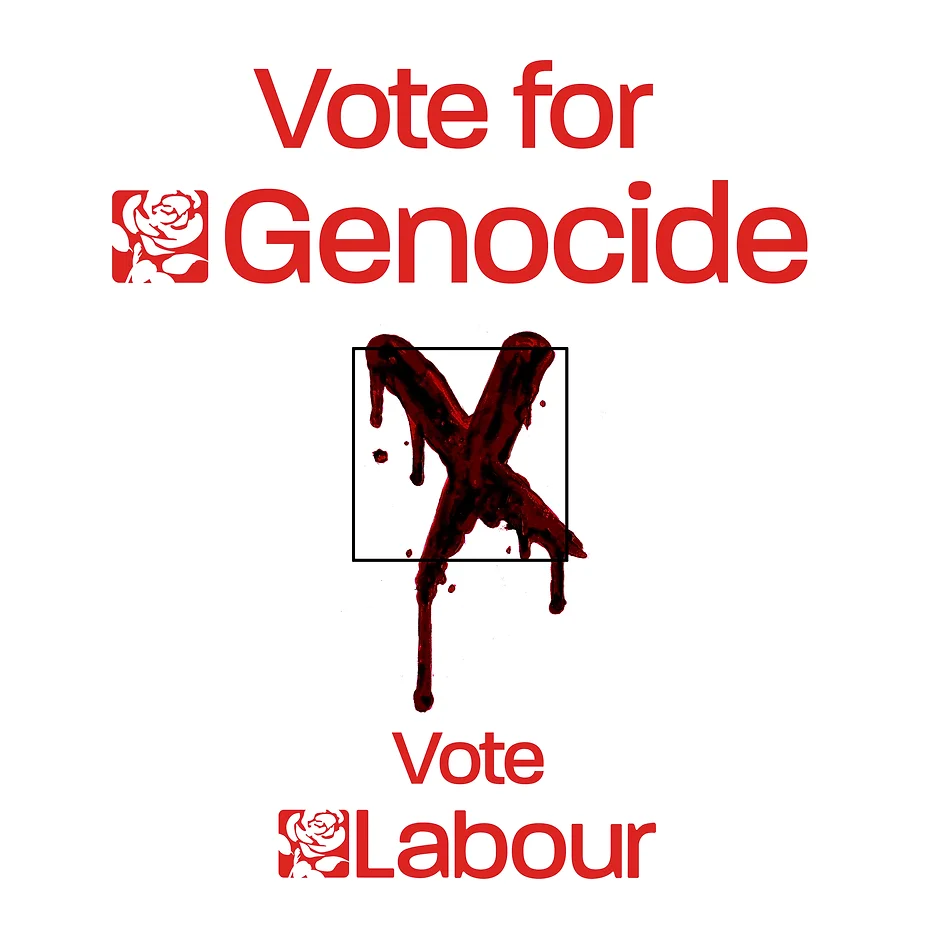
Genocide denier and Current UK Prime Minister Keir Starmer is quoted that he supports Zionism without qualification. He also confirms that UK air force support has been essential in Israel’s mass-murdering genocide. Includes URLs https://www.declassifieduk.org/keir-starmers-100-spy-flights-over-gaza-in-support-of-israel/ and https://youtu.be/O74hZCKKdpAKeir Starmer objects to criticism of the IDF. He asks how could anyone object to them starving people to death, forced marches like the Nazis did, bombing Gaza’s hospitals and universities, mass-murdering journalists, healthworkers and starving people queuing for food, killing and raping prisoners and murdering children. He calls for people to stop obstructing his genocide for Israel.Vote Labour for Genocide.
German Chancellor Friedrich Merz, U.S. President Donald Trump, and French President Emmanuel Macron. DeSmog collage. Credit: Faces of the World / Flickr (Macron), Steffen Prößdorf (Merz), Gage Skidmore / Flickr (Trump)
European leaders are bending to the demands of U.S. climate science deniers.
“The CSDDD is the greatest threat to America’s sovereignty since the fall of the Soviet Union,” the Heartland Institute, a pro-Trump U.S. think tank, tweeted on 31 March.
The Heartland Institute is one of the world’s leading climate science denial groups. It has helped to draft Donald Trump’s anti-climate policies, which have seen the president pledge to “drill baby drill” for more fossil fuels and once again pull the U.S. out of the flagship 2015 Paris Agreement.
Over recent months – along with a host of other Trump allies – the Heartland Institute has set its sights on a new target: the EU’s Corporate Sustainability Due Diligence Directive (CSDDD).
This vague acronym belies the potentially transformative impact of the new law. In its original form, the CSDDD sought to require large companies – and those in “high risk” sectors – trading in the EU to address human rights and environmental issues in their own operations and in their supply chains. High turnover companies would also have been forced to adopt a plan to align with the Paris Agreement, including setting emissions reduction targets.
The Heartland Institute and its anti-climate, anti-regulation peers are vocal opponents of the law – and launched an aggressive campaign to water it down, or even to see it scrapped entirely.
These groups, which are all part of the ‘Make America Great Again’ (MAGA) ecosystem, view the CSDDD as symbolic of the way in which “woke” governments are attempting to force citizens and global corporations to conform to a pro-diversity, pro-environment agenda.
Following Trump’s election in November, these MAGA groups wasted no time in formulating their plans to oppose this perceived agenda.
They focused in particular on diversity, equity and inclusion (DEI) initiatives, which attempt to create workplaces free from bias – and environmental, social and governance (ESG) schemes, which try to ensure that organisations are guided by responsible and sustainable practices, not just profit.
In December, barely a month after Trump’s victory, the Heritage Foundation – the group that wrote the key ‘Project 2025’ blueprint for the president’s second term – published a report entitled: “ESG, DEI, and What to Do About Them”.
In the report, the Heritage Foundation described ESG and DEI as “pernicious”, and called the CSDDD “a serious problem”.
Two months later, the State Financial Officers Foundation – an influential network of Republican finance officials – wrote an open letter calling on the new administration to “investigate” the CSDDD, claiming that the EU’s directives are based on “unscientific assumptions about the nature of climate change impacts” and “will force companies to incriminate themselves”.
This quickly filtered through to Trump’s Cabinet. On 12 February, Howard Lutnick, the president’s pick for commerce secretary, told a Senate committee that the CSDDD threatened to place “significant burdens” on U.S. companies, and that the Trump administration was exploring the use of “commercial tools” to mount a counter-attack against the EU’s environmental regulations.
Soon this rhetoric made its way to the White House. In March, as part of the worldwide tariffs implemented by the Trump administration, the president called the EU “one of the most hostile and abusive taxing and tariffing authorities in the world”.
But the EU hasn’t stood firm in the face of Trump’s war of words.
The EU has already announced that it will be scaling back the CSDDD and delaying its implementation. The number of companies within scope has been reduced by 80 percent. The firms in question will only be required to file due diligence reports every five years, and won’t be required to investigate the ESG operations of their indirect business partners. The implementation of the law has also been postponed until 2028.
But Trump’s MAGA hardliners are still not satisfied. In April, the Heartland Institute released an open letter signed by 31 other groups, calling for Congress and the Trump administration to “take immediate steps to counter the CSDDD’s implementation”, including “if necessary, imposing retaliatory trade policies that punish EU nations for eroding America’s sovereignty, freedoms, and prosperity.”
This backlash is now influencing European leaders. In late May, French President Emmanuel Macron and German Chancellor Friedrich Merz called for the CSDDD to be scrapped entirely. They claim it must be abandoned in order to defend the “competitiveness” of European corporations, with Macron stating that Europe must “synchronise with the U.S. and the rest of the world.”
This judgement signifies the appeasement of anti-climate pressure groups that are ideologically opposed to clean energy and climate science.
The Heartland Institute has denied that humans are driving climate change, which it has called a “delusion”, while the Heritage Foundation’s Project 2025 document urged Trump to “dismantle the administrative state”, reverse policies on climate action, slash restrictions on fossil fuel extraction, scrap state investment in renewable energy, and gut the Environmental Protection Agency.
If the EU waters down its climate policies in response to Trump’s pressure, it will have helped to send Project 2025 global.
The ‘Climate Cartel’
It’s unclear whether these MAGA groups – and the Trump administration – will ease up on the EU if the CSDDD is ditched entirely. They may simply use it as evidence that European lawmakers will buckle under enough pressure.
Indeed, MAGA’s opposition to the CSDDD is part of a multi-pronged campaign that seeks to dismantle global climate initiatives pioneered by both governments and corporations.
Much of the original groundwork for this campaign was undertaken by the U.S. House Judiciary Committee and its chair Jim Jordan, a leading Trump supporter.
Last year, Jordan’s committee produced reports – and demanded evidence from major corporations – on a supposed “climate cartel” of “left-wing activists and major financial institutions”.
The committee alleged that some of the world’s biggest asset managers – that have questionable climate commitments – are conspiring to force American companies to decarbonise against their wishes.
As part of its “investigation”, the committee demanded information from more than 130 U.S.-based companies, retirement and pension programmes, as well as 60 U.S.-based asset managers.
In November, 11 Republican-led states sued BlackRock, Vanguard, and State Street – three of the world’s biggest asset managers – over their ESG policies. In West Virginia and Oklahoma, nearly two dozen banks have been barred from public contracts for trying to divest from fossil fuels.
These actions, along with the anti-climate rhetoric of Donald Trump, have had a chilling effect. In February last year, BlackRock, State Street, and JP Morgan Asset Management withdrew from Climate Action 100+, an investor-led initiative that works to ensure the world’s largest greenhouse gas emitters take action on climate change.
Fast forward a year, and a growing list of major U.S. corporations are either cancelling or delaying their sustainability reports – designed to show how they are meeting their climate commitments.
And a new story from the investigative outlet CORRECTIV today reports that German insurance giants and investment firms are withdrawing from climate agreements, while companies are quietly shelving their sustainability policies, amid the anti-ESG backlash orchestrated by Trump and his acolytes.
As one sustainability expert at a financial firm told CORRECTIV: “We have to be careful not to harm the cause by sticking our necks out and becoming a target in the U.S.”
This article was produced with support from the European Media and Information Fund, managed by the Calouste Gulbenkian Foundation. The sole responsibility for any content supported by the European Media and Information Fund lies with the author(s) and it may not necessarily reflect the positions of the EMIF and the Fund Partners, the Calouste Gulbenkian Foundation and the European University Institute.
European Union flag on wall with a crack. Credit: Alexander Borisenko / Alamy Stock Photo
The group behind the radical Project 2025 agenda is increasingly turning its attention to Europe.
The group that drafted a key blueprint for Donald Trump’s second term convened a meeting in Washington D.C. this week to consider proposals for bulldozing the European Union (EU).
The Polish investigative outlet VSquare revealed that the Heritage Foundation gathered hardline conservative groups on 11 March to hear how they would overhaul the current structures of the EU.
The “closed-door workshop” featured a debate on a new paper produced by the lobby groups MCC and Ordo Iuris entitled: “The Great Reset: Restoring Member State Sovereignty in the 21st Century”.
The paper proposes dismantling the European Commission and the European Court of Justice. It claims that the “EU is evolving into a quasi-federal state, limiting national decision-making power” and is imposing “ideologically motivated policies on member states, without any mandate”. Under the plan, the EU would cease to function in its current guise, and would instead be renamed the European Community of Nations (ECN).
Kenneth Haar, a researcher and campaigner at the transparency watchdog Corporate Europe Observatory, said it was “quite simply terrifying” to see the Heritage Foundation moving its attention to Europe.”
“Most of the attacks made by the Trump presidency in recent weeks on civil rights, on migrants, on LGBTQ+ rights and more, can be traced back to Project 2025,” he said. “We should be worried about them building up ambitions and strength in Europe.”
DeSmog can also reveal that the Heritage Foundation has been holding private meetings with European politicians in recent months, as the group attempts to forge new alliances on the continent.
Neo-Fascist Climate Science Denier Donald Trump says Burn, Baby, Burn.Elon Musk urges you to be a Fascist like him, says that you can ignore facts and reality then.