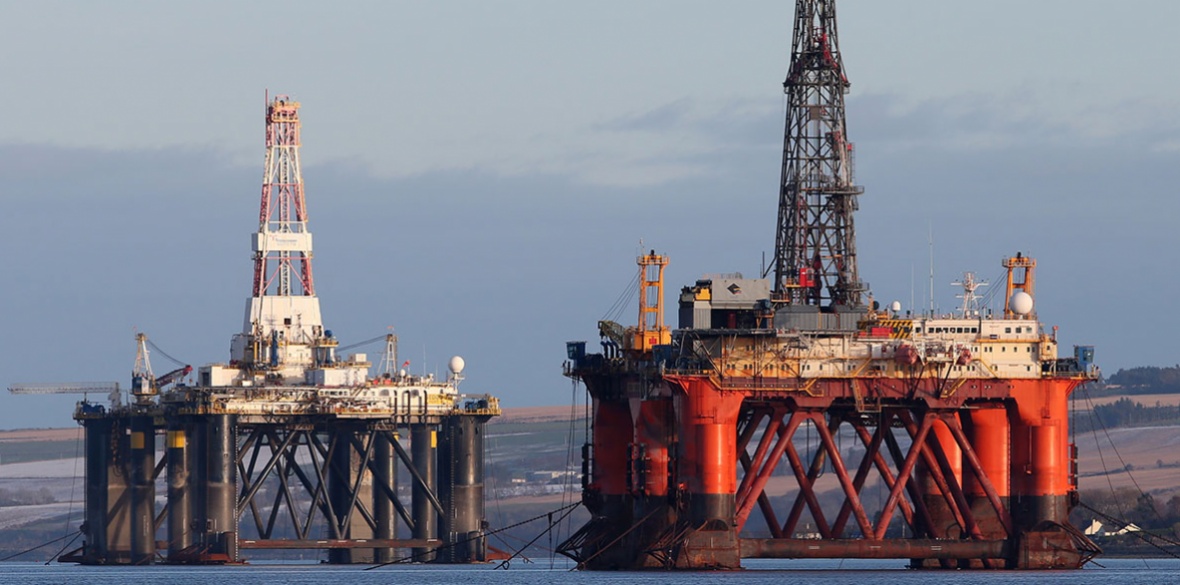
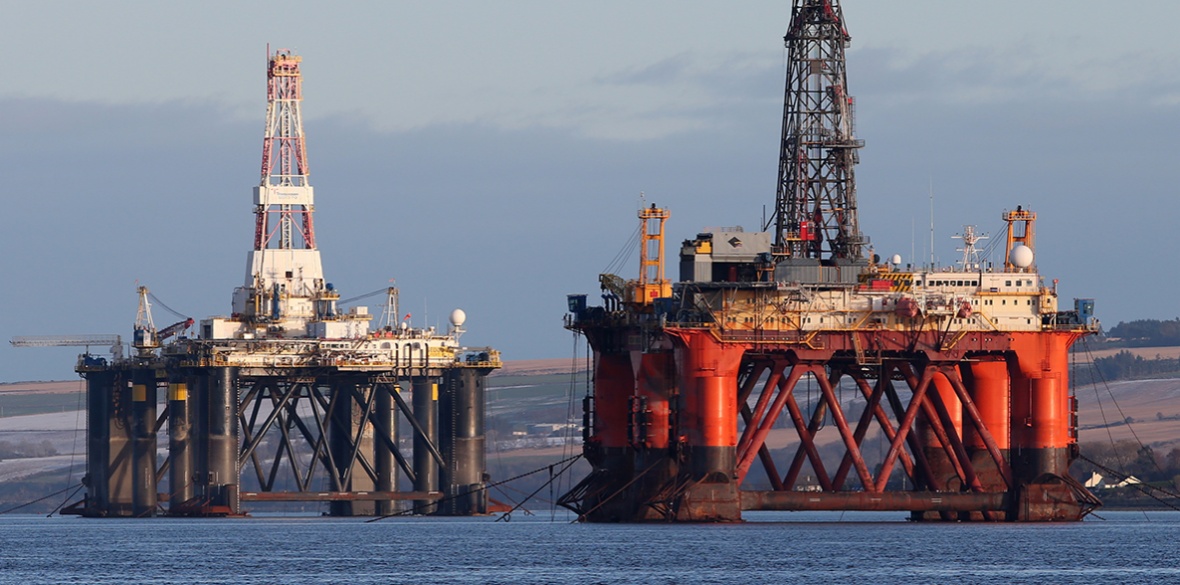
An oil platform standing amongst other rigs that have been left in the Cromarty Firth near Invergordon in the Highlands of Scotland, February 15, 2016
BUSINESSES across Britain have backed the Labour government’s ban on new oil and gas licensing in the North Sea, according to new research today.
The study, carried out by Public First on behalf of fair transition think tank Uplift, found that 70 per cent of British business leaders and 65 per cent in Scotland backed the policy, 54 per cent believed it would benefit their business, and 77 per cent believed phasing out fossils fuels was in the public interest.
In Scotland, the heart of Britain’s fossil fuel industry, 82 supported wider UK government efforts to end use of fossil fuels for energy.
And despite 47 per cent believing the pace of change to be too slow, a majority believe it will be achieved by the government’s 2050 target.
Fifty-two per cent of business leaders in Scotland expressed confidence that new jobs would be created to replace the tens of thousands lost as North Sea oil and gas production dwindles.
But echoing the views of trade unions, they argue it is governments’ responsibility to support workers through that shift.
North Sea oil and gas licenses may be ruled unlawful after High Court bans new coalmine
NORTH Sea oil and gas licences may be ruled unlawful after plans for Britain’s first coalmine in 30 years were thrown out at the High Court, a leading campaigner said today.
The government was urged to provide to sustainable jobs and a “coherent” industrial strategy after the ruling left “all eyes on” judicial reviews of the proposed Rosebank and Jackdaw offshore oil and gas fields.
Planning permission for a new mine in Whitehaven in Cumbria was quashed after claims it would be “net zero” were challenged by Friends of the Earth (FoE) and South Lakes Action on Climate Change (SLACC).
Mr Justice Holgate said in his judgement: “The assumption that the proposed mine would not produce a net increase in greenhouse gas emissions, or would be a net-zero mine, is legally flawed.”
Project developer West Cumbria Mining (WCM) said it would “consider the implications” but the judgement suggests a landmark ruling in June has paved the way for successful legal challenges against fossil-fuel extraction projects in Britain.
…
FoE senior lawyer Niall Toru said today’s ruling was “a huge victory for our environment” which “could have ramifications internationally as there are cases abroad where challenges are being made against fossil-fuel projects on a very similar basis.”
He added: “We believe that the writing is on the wall and that WCM should withdraw its application for this climate-wrecking project.”
Activists hold a white sign reading “Rosebank will kill us” on September, 27, 2023 in London, United Kingdom. (Photo: Mike Kemp/In Pictures via Getty Images)
Oceana U.K.’s leader called the decision “a massive win for campaigners and another step towards… a cleaner, greener future for our seas, planet, and climate.”
Climate campaigners celebrated Thursday after the United Kingdom’s new Labour government announced it will not legally defend decisions to allow controversial offshore drilling in a pair of areas in the North Sea.
The two sites are Shell’s Jackdaw gas field and the Rosebank oil field, owned by Equinor and Ithaca Energy. Both projects have been loudly criticized by international green groups as well as U.K. opponents.
“This is amazing news and a BIG WIN for the climate. The government must now properly support affected workers and prioritize investment in green jobs,” declared Greenpeace U.K., which along with the group Uplift had demanded judicial reviews.
The approvals for both North Sea sites occurred under Conservative rule—in 2022 for Jackdaw and last year for Rosebank, the country’s biggest untapped oil field. Voters handed control of the government back to the Labour Party in May.
Then, as The Guardian detailed, “in June, the cases against the oil and gas fields received a boost when the Supreme Court ruled in a separate case that ‘scope 3’ emissions—that is, the burning of fossil fuels rather than just the building of the infrastructure to do so—should be taken into account when approving projects.”
“Now we need to see a just transition plan for workers and communities across the U.K. and an end extraction in the North Sea for good!”
The U.K. Department for Energy Security and Net Zero, led by Secretary Ed Miliband, cited the “landmark” Supreme Court ruling in a Thursday statement that highlighted the government’s decision not to defend the approvals “will save the taxpayer money” and “this litigation does not mean the licences for Jackdaw and Rosebank have been withdrawn.”
“Oil and gas production in the North Sea will be a key component of the U.K. energy landscape for decades to come as it transitions to our clean energy future in a way that protects jobs,” the department claimed, while also pledging to “consult later this year on the implementation of its manifesto position not to issue new oil and gas licenses to explore new fields.”
Welcoming the U.K. government’s acceptance of the recent high court ruling, Uplift founder and executive director Tessa Khan said on social media that “the immediate consequence… is that the Scottish Court of Session is very likely to quash the decision approving Rosebank, although we’re likely to have to wait a while before that’s confirmed.”
“If Equinor and Ithaca Energy decide they still want to press ahead with developing the field,” Khan explained, “then the next step will be for them to submit a new environmental statement to the [government] and regulator… that includes the scope 3 emissions from the field.”
“If you need reminding, those emissions are massive: the same as 56 coal-fired power plants running for a year or the annual emissions of the world’s 28 poorest countries,” she added. “If Equinor and Ithaca try to push Rosebank through again, the U.K. [government] must reject it.”
The government has made the right decision not to waste time and money trying to defend the indefensible.
The oil and gas industry will fight back. But the days where they can cause such devastating harm while everyone else pays the price are over.
Greenpeace similarly stressed that “Rosebank and Jackdaw would generate a vast amount of emissions while doing nothing to lower energy bills,” and “the only real winners from giving them the greenlight would be greedy oil giants Shell and Equinor.”
“To lower bills, improve people’s health, upgrade our economy,” the group argued, the government must: increase renewable energy; better insulate homes; and boost support for green jobs.
Celebrations over the government’s decision and calls for further action weren’t limited to the groups behind the legal challenges.
Oceana U.K. executive director praised the “incredible work” by Greenpeace and Uplift, and called the government dropping its defense “a massive win for campaigners and another step towards… a cleaner, greener future for our seas, planet, and climate.”
“There is no defending more fossil fuel extraction,” the organization said. “Now we need to see a just transition plan for workers and communities across the U.K. and an end extraction in the North Sea for good!”
Global Witness similarly celebrated the government’s move, declaring on social media that “this is brilliant news!”
“New oilfields are an act of climate vandalism,” the group added. “Governments must prioritize people, not polluters’ profit.”
The UK government has today (Thursday) confirmed it will not challenge the judicial review brought against the Rosebank oil and gas development.
Campaign groups Uplift and Greenpeace launched legal action against the approval of the West of Shetland development late last year.
They claimed the decision made by the former UK government was “unlawful” as it failed to consider the impact of burning the fossil fuels extracted from the development during its lifetime.
Although the new Labour administration said it would not be contesting the legal case, it does not mean the licenses have been withdrawn.
However, it leaves questions for the future of the controversial development.
dizzy: The oil companies involved in the Rosebank (and Jackdaw) fields can contest the judicial review. However, this is still a huge step in defeating Rosebank. Well done, all those involved in stopping Rosebank.
Campaigners take part in a Stop Rosebank emergency protest outside the U.K. Government building in Edinburgh, after the controversial Equinor Rosebank North Sea oil field was given the go-ahead Wednesday, September 27, 2023. (Photo: Jane Barlow/PA Images via Getty Images)
GREENPEACE has said that a legal case launched by Shell intended to intimidate it and drain its resources has instead had the opposite effect, with members of the public donating over £1 million to support the NGO.
The group launched the fundraiser last November after Shell announced that it was suing over a peaceful climate protest in the North Sea, in which activists occupied a moving oil platform to protest against the damage caused by the oil giant.
Although Shell, which reported a record £22.3 billion in profits last year, acknowledges no damage was caused to its equipment, it is still demanding extensive damages.
Donations are being used to fight the case and to campaign for oil giants to “stop drilling and start paying” for the environmental damage they have caused.
Almost 25,000 donations were received in just nine months, and the funds raised now exceed the amount Shell is seeking in damages ($1m, or £789,000), although it is likely legal costs will run into the millions.
Greenpeace UK campaigner Philip Evans said: “Shell’s attempt to intimidate us is only making us stronger.