Most People on Earth, Even in Petrostates, Want Quick Fossil Fuel Phaseout: Poll

Spread the love

Original article by EDWARD CARVER republished from Common Dreams under Creative Commons (CC BY-NC-ND 3.0). 

Campaigners gathered outside the Houses of Parliament in London, United Kingdom, in January 2024 to protest the issuance of North Sea oil and gas licenses. 
(Photo: Martin Pope/SOPA Images/LightRocket via Getty Images)

“There can be no doubt that citizens across the world are saying to their leaders, you have to act and, above all, have to act faster,” a U.N. official said. “This is an issue that almost everyone, everywhere, can agree on.”

A large majority of the global population, including people who live in oil, gas, and coal producing countries, supports a fast transition to clean energy and a phaseout of fossil fuels, a poll released Thursday showed.

Across 77 countries, 72% of those surveyed supported a quick fossil fuel phaseout, while an even higher percentage, 80%, supported stronger climate action in general, according to the poll, called Peoples’ Climate Vote and conducted for the United Nations Development Program (UNDP) with the University of Oxford and GeoPoll.

“There can be no doubt that citizens across the world are saying to their leaders, you have to act and, above all, have to act faster,” UNDP Administrator Achim Steiner told The Guardian. “This is an issue that almost everyone, everywhere, can agree on.”

People in most major fossil fuel producing nations support a quick energy transition in their own countries, the poll showed. In the United States, the world’s largest oil and gas producer, 53% supported either a “very” or “somewhat” quick phaseout; in Saudi Arabia, the second largest, 75% did so; and in China and India, the leading coal producers, the figures were 80% and 76%, respectively.

The poll also showed overwhelming support for transnational cooperation, even if it requires setting aside other differences: 86% of those surveyed said want countries to tackle climate change together. Steiner called this a “stunning” level of consensus.

Steiner noted that fossil fuel subsidies distort the market and subvert the public will for change.

“There are very narrow, self-interested agendas that maintain artificially inflated [profits] for fossil fuel-based industries that ultimately are coming at the cost of everyone,” he said.

The poll—the largest standalone public opinion survey on climate change to date, building on a first edition that was run in 2021—clarifies the will of the global public and strengthens the moral case for climate action, commentators said.

“Brilliant to see clear, credible evidence that the overwhelming majority of people across the world—oil rentier economy or not—want to see transition from fossil fuels to renewable energy ‘quickly,'” X user Dave Drabble wrote. “Let’s not let oil and gas interests determine our fate.”

Similarly rejecting the influence of fossil fuel interests, Steiner said, “It is so important we let the people speak for themselves.”

Original article by EDWARD CARVER republished from Common Dreams under Creative Commons (CC BY-NC-ND 3.0). 

Continue ReadingMost People on Earth, Even in Petrostates, Want Quick Fossil Fuel Phaseout: Poll

The world no longer needs new fossil fuels – and the UK could lead the way in making them taboo

Spread the love
Savva_25/Shutterstock

Greg Muttitt, UCL; Fergus Green, UCL, and Steve Pye, UCL

North Sea oil and gas has become a battleground issue in the UK general election.

The Labour party’s manifesto promises an end to issuing new licenses for finding oil and gas. The Conservative party meanwhile proposes a law that would require the next government to hold a licensing round every year.

Our recent study found that new fossil fuels are not needed, and that stopping the extraction of new coal, oil and gas is among the best ways to tackle the climate crisis.

Scientific assessments tell us that global warming above 1.5°C will mean escalating danger to the environment, human health and the economy. We found that, in a world that limits warming to 1.5°C, remaining global demand for fossil fuels could be met by assets that have already been built.

This means that Labour’s plans do not go far enough. Even under existing licenses, new oil and gas fields need not be opened, nor new platforms and pipelines built.

Surplus to requirements

Our research confirms an earlier finding of policy experts at the International Energy Agency (IEA): that no new fields are needed to meet energy demand as the world attempts to achieve net zero emissions. However, our analysis goes further by demonstrating that no new fossil-fuelled power stations are needed either.

If governments stop new projects, the production and consumption of fossil fuel will gradually decline over coming decades as existing assets reach the end of their lifespans. This gradual transition will give time to plan the process, to protect and create jobs and to build solar and wind farms that meet energy demand as fossil fuels are phased out.

A seaman working on an offshore rig.
Winding down the fossil fuel industry should allow workers time to retrain.
Arild Lilleboe/Shutterstock

A stop to new fossil fuel projects is essential to “transitioning away” from coal, oil and gas, which is what governments agreed to do in December 2023 at the COP28 climate summit in Dubai. This is a necessary commitment, but since it is expressed as a vague and collective goal with an indeterminate end point, it is easy for governments to pay lip service to it while maintaining business-as-usual.

The IEA recently reported that global investment in fossil fuels has increased every year since 2020, even as governments announced net zero emissions targets. An investigation by campaign group Global Witness found that the United Arab Emirates signed over US$100 billion of oil deals in 2023 while it presided over climate negotiations.

Commitments to no new fossil fuels, such as Labour’s plan to end new licensing, are less prone to obfuscation because they are specific and immediate. What’s more, it is clear for everyone to see if a new fossil fuel project is being built. Making commitments that are easily verifiable is a proven recipe for building international trust and cooperation around a shared goal.

There are also political advantages to stopping new fossil fuel projects. Coalitions that support fossil fuels, including oil firms and their employees, are more capable of organising against the closure of existing assets than the cancellation of those yet to be built. Opposing coalitions, including communities living with the pollution and disruption of oil and gas extraction, tend to be more successful when mobilising against planned projects.

The new norm

By making a “no new fossil fuels” commitment, governments can help establish a new norm.

A norm is an expected standard of behaviour, like the norm against smoking in indoor public places, or the international norm against slavery. The more states and global institutions adopt a norm the more social pressure it places on others to follow suit. Once a critical mass has adopted the norm, its spread is self-sustaining.

Arguably, this process is well underway for coal – the dirtiest fossil fuel. The Powering Past Coal Alliance, a group of governments committed to phasing out coal power, was founded in 2017 by the UK and Canada. Already the alliance has expanded to include 60 national governments, including major coal consumers Germany and the US.

An excavator piles coal onto a truck.
Global coal demand rose when gas prices spiked in 2021 and 2022.
Roman Vasilenia/Shutterstock

The process of norm-building is gathering pace for other fossil fuels too. Governments that become core members of the Beyond Oil and Gas Alliance, which so far numbers 15, commit to issuing no new licenses for oil and gas exploration on a path to the total phase-out of fossil fuel production.

The Clean Energy Transition Partnership, comprising 41 governments and financial institutions, commits to ending international lending for fossil fuel projects. And in the private sector, 22 financial institutions have pledged to stop financing new oil and gas projects.

Were a future UK government to commit to stopping new oil and gas fields, it would lend considerable momentum to the norm, given the UK’s role in the history of the oil industry and the fact that is home to BP and Shell, two of the world’s five “supermajor” oil companies.

The UK Climate Change Committee, the government’s independent advisers, has noted that stopping new oil and gas projects would send an important signal to other countries. Such a move would also restore the UK’s reputation as an international leader on tackling climate change, at a critical time when the climate-denying far right is making inroads.


Imagine weekly climate newsletter

Don’t have time to read about climate change as much as you’d like?

Get a weekly roundup in your inbox instead. Every Wednesday, The Conversation’s environment editor writes Imagine, a short email that goes a little deeper into just one climate issue. Join the 30,000+ readers who’ve subscribed so far.The Conversation


Greg Muttitt, Honorary Research Fellow, Energy & Climate Change, UCL; Fergus Green, Lecturer in Political Theory and Public Policy, UCL, and Steve Pye, Associate Professor in Energy Systems, UCL

This article is republished from The Conversation under a Creative Commons license. Read the original article.

Continue ReadingThe world no longer needs new fossil fuels – and the UK could lead the way in making them taboo

Climate Obstructionism Runs Deep in the UK — Watch Out for It at the Election

Spread the love

Original article by Freddie Daley and Peter Newell republished from DeSmog.

Credit: Lindsay Grime.

Regardless of who wins next month, fossil fuel interests have multiple levers for influencing policy.

The UK is heading to the polls on July 4. Although it doesn’t get enough attention, the two major parties — the Conservatives and Labour — have chosen climate change and, in particular, fossil fuel production in the North Sea as a clear political dividing line for the electorate. 

As polling day draws closer, and election fervour takes hold, we will see the forces of British climate obstruction in full effect. Influential individuals, organisations and media outlets that seek to block, dilute, delay, or even reverse climate policies will attempt to widen that political dividing line with a mixture of claims to be defending individual freedoms, putting growth first, being ‘climate realists’, or by displacing concerns about the UK’s responsibility to act on climate change through ‘whataboutism’.

The Conservative government, under Prime Minister Rishi Sunak, has pushed ahead with issuing hundreds of new oil and gas licences in the North Sea. The government was due to further reform the licensing regime so permits are handed out on an annual basis, all under the auspices of ‘energy security’, but the election has halted the bill’s progress through Parliament. Future licences are expected to yield just three weeks’ worth of gas per year

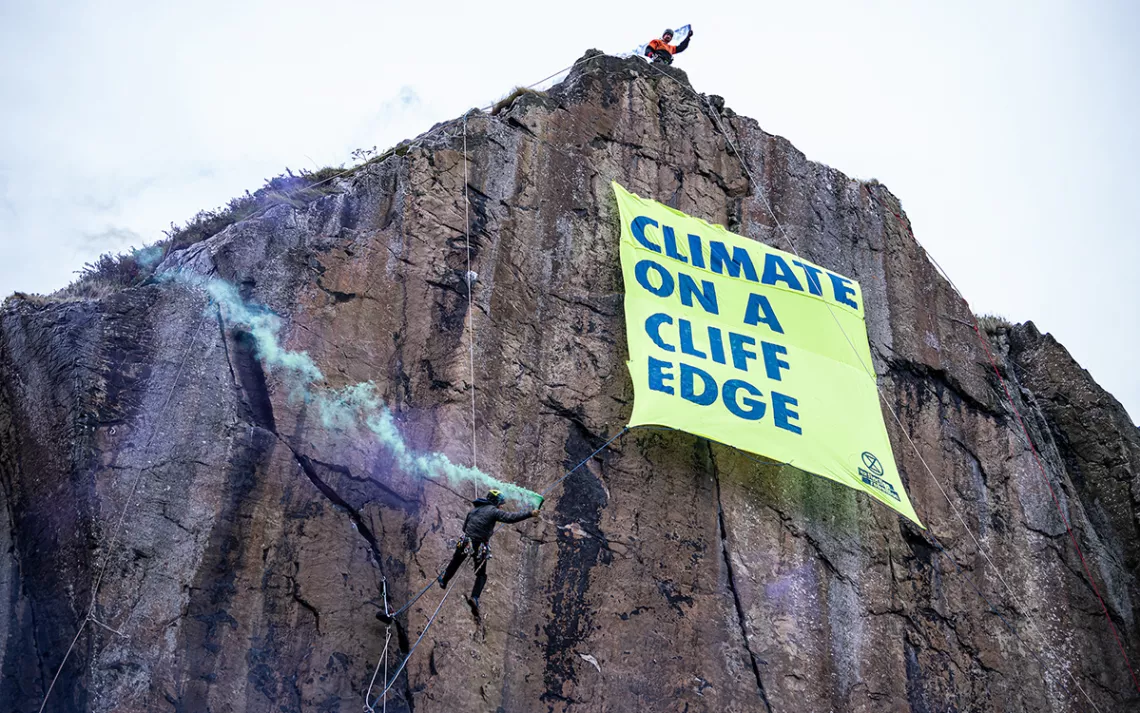
Sir Keir Starmer’s Labour Party, however, announced that it will end new licensing for oil and gas in the North Sea, with the very large caveat of honouring those already approved. But even this announcement ignited fierce resistance from the media, trade unions, Labour’s political opponents and some figures it deemed allies. The plan was labelled as “Thatcher on steroids”“naive”, and risked “creating a cliff-edge” for industry and investment in and around the North Sea. In response to the vitriol, Starmer conceded that fossil fuels will continue to be used in the UK “for many, many years”.  

This episode provides a useful insight into how climate obstructionism operates in the UK. In a new publication for the Climate Social Science Network (CSSN) based at Brown University, alongside Dr Ruth McKie and Dr James Painter, we identified three major channels through which obstructionism operates in Britain and the network of organisations that sustain it. 

Financial Power

The first is the material. This speaks to the financial and structural power of the fossil fuel industry that allows it to use threats of capital flight and job losses to curry favourable policy conditions and fend off tax hikes that would dent profitability. It also speaks to party donations, where fossil fuel firms, or those that benefit from their expansion, provide funds to individual politicians or the wider party for access and a say over policy. 

Since 2019, the Conservatives have received £8.4 million in donations from big polluters and those with direct links to fossil fuel production. The current Energy Security and Net Zero Secretary, Claire Coutinho, accepted a £2,000 donation in January 2024 from Lord Michael Hintze, a funder of the UK’s leading climate science denial group, the Global Warming Policy Foundation. Labour too have taken money from big polluters, most notably Drax, whose North Yorkshire power plant is the UK’s single largest source of emissions.

Alongside the material sits the institutional. The policy making process in the UK provides a multitude of opportunities for actors to shape policy, all within the bounds of proper procedure and due process. All Party Parliamentary Groups (APPGs), informal groups of politicians organised around key themes or policy issues, have provided an effective fora for obstructionist actors to garner access and shape policy. The rules governing APPGs often inhibit public scrutiny. Trade associations, and the companies they represent, can be omitted from official parliamentary transparency logs as only benefits in kind above £1,500 a year must be declared — a threshold many industry bodies claim not to meet. 

Revolving doors between industry and government are another institutional means through which fossil fuel interests can determine policy. An investigation by The Ferret found that since 2011, 127 former oil and gas employees have gone into top government roles and been appointed to ministerial advisory boards. At least a dozen of these individuals were given roles in the North Sea Transition Authority, the organisation tasked with governing oil and gas production, as well as within departments responsible for writing energy and climate policy. Shutting this revolving door, or even just slowing it down through ‘cool-off’ periods, would go some way in curtailing obstructionism. 

Climate Delay

The final, and perhaps most pronounced, thread of climate obstructionism in the UK is discursive, primarily promoted through the media. The right-leaning media in the UK, such as the Daily Telegraph and Daily Mail, have persistently opposed climate policy and action. This opposition used to be grounded in outright denial, where the integrity of climate science was disputed and denigrated. Now, though, a more pernicious form of discursive obstructionism is prevalent; that of climate delay. 

Countless op-eds and articles have been published that acknowledge climate change but dispute the necessity of addressing it, the cost of implementing climate policy (both economically and in terms of national security), and the efficacy of green technologies such as wind turbines, electric vehicles (EVs) and heat pumps. These interventions, which are sometimes made by individuals with direct links to sceptic organisations or else use their framing, often push blatant untruths to the public, such as renewable energy pushing up household energy bills or solar panels  jeopardising British farming. The media continues to both demonise climate activists and undermine public support for key climate policies. 

In this election, watch out for climate obstructionism. While institutional channels may be curtailed due to purdah, others will pick up the slack. With all parties now firmly on an election footing, donations will become a crucial resource for knocking doors and getting out the vote in marginal seats. The sources of these donations, and the interests behind them, will bear the thumbprint of the fossil fuel industry. The media will increase its scrutiny of manifesto pledges and publish a litany of analyses. It is highly likely that Labour’s climate policy will be painted as a threat to national security, an insurmountable cost to the public purse, and reflecting the demands of both Vladimir Putin and Just Stop Oil simultaneously. The foundation of this framing has already been set. 

What is less clear, though, is what comes after July 4. With a change of government comes a reconfiguration of interests and, for the winners, concessions will be made to those actors and constituencies that helped get them past the post. For the losing party, most likely to be the Conservatives, there may be an ideological reorientation that ends the cross-party consensus on tackling climate breakdown, making them the party of climate obstructionism that challenges the necessity of net zero and fights for more oil and gas. 

This election might be the one that ends 14 years of Conservative rule, but it’s not likely to be the one to end climate obstructionism in the UK.  

Freddie Daley is a Research Associate at the Centre for Global Political Economy at the University of Sussex.

Peter Newell is a Professor of International Relations at the University of Sussex.

They are the authors of a chapter in Climate Obstructionism across Europe, a new collection of essays analysing the organisations, politicians, think tanks and media outlets seeking to delay, derail and denigrate climate policy, produced by the Climate Social Science Network.

Original article by Freddie Daley and Peter Newell republished from DeSmog.

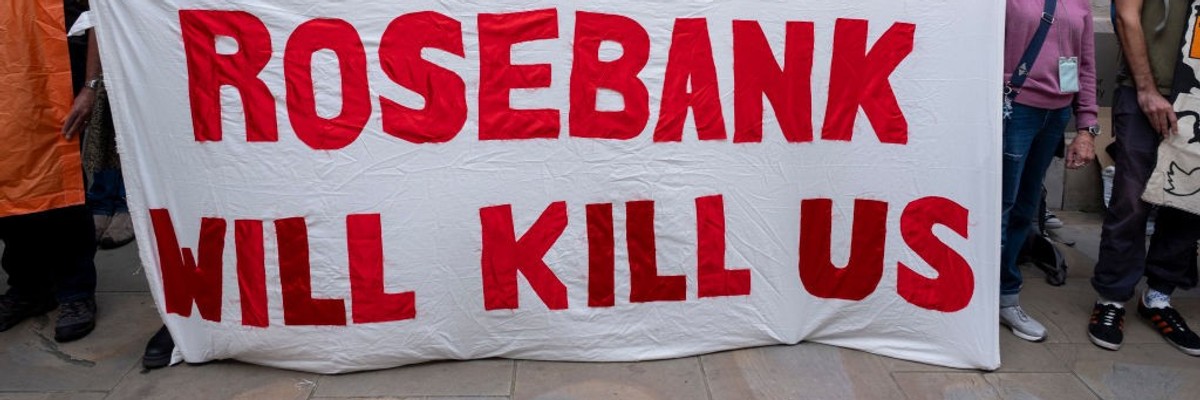
dizzy: I don’t agree that there is “cross-party consensus on tackling climate breakdown.” I suggest that instead the Conservative and Labour parties are indistinguishable in their support of plutocracy, sucking up to the rich and powerful. The Conservatives under Sunak have made no pretence of their intention to forge ahead with exploiting North Sea fossil fuels all they can and Labour do not intend to stop the Rosebank North Sea oil and gas field. Starmer has abandoned so many pledges that he should be recognised as as much a liar as Tony Blair or Boris Johnson.

The title of “… the party of climate obstructionism that challenges the necessity of net zero and fights for more oil and gas. ” is currently shared by the Conservatives and climate denier Nigel Farage’s Reform UK.

Rishi Sunak on stopping Rosebank says that any chancellor can stop his huge 91% subsidy to build Rosebank, that Keir Starmer is as bad as him for sucking up to Murdoch and other plutocrats and that we (the plebs) need to get organised to elect MPs that will stop Rosebank.

Continue ReadingClimate Obstructionism Runs Deep in the UK — Watch Out for It at the Election

‘Victory’: Gas Drilling Project Paused After Greenpeace Occupies Platform in North Sea

Spread the love

Original article by EDWARD CARVER republished from Common Dreams under Creative Commons (CC BY-NC-ND 3.0). 

Greenpeace activists from Germany and the Netherlands hold up a “No New Gas” placard next to an gas drilling platform that they occupied on June 4, 2024. 
(Photo: Axel Heimken/Greenpeace)

“Today’s events show that people power works!” a campaigner said. “Whether it is occupying a gas rig or challenging it in court, people will not be silent, we are standing up to the fossil fuel industry.”

A Dutch court on Tuesday ordered a pause to a gas drilling initiative in the North Sea after Greenpeace activists occupied a platform owned by the company behind the project, leading the environmental group to declare “victory” as it pushes for an end to new fossil fuel infrastructure in Europe.

The activists sought to disrupt the work of Dutch energy company ONE-Dyas, which had just received the go-ahead for offshore drilling from the Dutch government last week and quickly sent the drilling platform to the site, which is about 12 miles from the German island of Borkum and straddles Dutch and German waters.

“The science is clear, we must stop digging and drilling for fossil fuels if we are to avoid the worst of climate chaos,” Mira Jaeger, energy expert from Greenpeace Germany, said in a statement released earlier on Tuesday, before the court decision. “We cannot afford any new fossil fuel extraction projects. Not in the North Sea or anywhere else.”

“Today’s events show that people power works!” Jaeger said in another statement following the ruling. “Whether it is occupying a gas rig or challenging it in court, people will not be silent, we are standing up to the fossil fuel industry.”

Greenpeace, an environmental group that engages in nonviolent direct action, has previously occupied oil and gas rigs in the North Sea and elsewhere. Last year, the group’s campaigners occupied a platform contracted by Shell, a multinational oil and gas company, as it made its way to work in U.K. waters.

The planned Borkum drilling project, which Greenpeace has said would threaten rocky reefs and a local nature reserve, has been the subject of a legal and regulatory fight in recent years. Environmental and community groups filed a lawsuit against it in Dutch court, and a judge halted the project for over a year starting in April 2023. However, following court-ordered changes, the Dutch state secretary for economic affairs and climate approved the project last week. On Monday, Offshore Energy, a trade publication, declared that the project, which it said involves an investment of more than $500 million, had “no more legal woes” and would produce gas by the end of the year. A Dutch official noted the importance of a domestic supply of natural gas in approving the project, Offshore Energy reported.

With the company moving quickly, Greenpeace activists aimed to block the installation of the platform on Tuesday. Five of the 21 who went to sea for the action occupied the platform, called Prospector 1, and tied themselves to pillars, according to Greenpeace. The occupation lasted 8 hours, ending when news came of the court ruling.

Tuesday’s ruling suspended the approval granted by the Dutch state secretary for economic affairs, and is to be followed by a hearing on June 12. The decision came at the request of environmental and community groups, which submitted an application on Friday for “provisional relief.” The groups aim to block the drilling initiative entirely, arguing that ONE-Dyas should abandon its “legal tricks” and “accept reality and abandon the project.”

Greenpeace, which was one of the plaintiffs in the application, reiterated its demand on Tuesday that the project be permanently canceled, while calling for the E.U. to abandon all fossil fuel infrastructure projects.

“The Borkum project is just the tip of the iceberg: in Europe, fossil fuel companies are pushing European states into such massive, unnecessary investments just like TotalEnergies’ LNG terminal in France, or OMV’s Neptun Deep gas drilling project in Romania,” the first Greenpeace statement said. “But the European Union can and must put its member states on a path away from fossil fuels, by banning new fossil fuel projects and investing in an energy system based on renewables and energy sufficiency.”

Original article by EDWARD CARVER republished from Common Dreams under Creative Commons (CC BY-NC-ND 3.0). 

Continue Reading‘Victory’: Gas Drilling Project Paused After Greenpeace Occupies Platform in North Sea

Week of Protests Over Equinor’s Media Sponsorship Greenwashing

Spread the love

Original article by Adam BarnettPhoebe Cooke and Ellen Ormesher republished from DeSmog

Eldar Saetre, CEO of Equinor. Credit: Jeff Gilbert / Alamy

Campaigners likened the fossil fuel company’s patronage of climate events to letting an “arsonist sponsor a fire safety conference”.

Major media companies have sparked a wave of criticism after allowing a Norwegian oil and gas company behind the UK’s largest new North Sea project to sponsor events on climate change.

Equinor was an official sponsor of two conferences on climate and energy this week, one run by the New Statesman magazine, and one run by Politico. Both saw MPs pull out over the sponsorship, while the first was interrupted by a climate activist. 

The Norwegian state-owned company has a majority stake in the Rosebank North Sea oil field, which has been dubbed a “carbon bomb” by environmental law charity ClientEarth. 

Equinor claims it supplies 27 percent of the UK’s energy from oil and gas, and is currently investing $6 billion (£4.8 billion) a year in fossil fuel exploration and drilling.

“Allowing fossil fuel companies like Equinor to sponsor and speak at climate conferences is as absurd as allowing an arsonist to sponsor and participate in fire safety conferences,” said Carys Boughton of the Fossil Free Parliament campaign. “At this critical time for climate and energy policy-making, we can’t afford this absurdity.”

Equinor’s sponsorship of these events is the latest example of fossil fuel companies using media partnerships to greenwash their polluting activities. 

An investigation by DeSmog and Drilled in December detailed how oil and gas companies are using media deals – including partnerships with Politico, the Economist, the Financial TimesReuters, and the Washington Post – to present a climate-friendly image. 

DeSmog also revealed this week, based on documents released by a powerful U.S. congressional committee, that fossil fuel companies believe these media partnerships help to protect their “social licence to operate”.

Michelle Amazeen, a mass communications researcher at Boston University, said that oil and gas sponsorship is “a strategic move by fossil fuel companies to compromise the integrity of events intended to foster dialogue and action around climate issues”. 

She added that, “While the sponsorship gives the impression of caring about the environment, it’s a veneer that’s like an oil slick obscuring the actual conduct of the fossil fuel industry.”

This week, a cross-party group of 50 MPs, including three Conservatives, wrote to Prime Minister Rishi Sunak urging him to end the licensing of new oil and gas fields, appoint a climate envoy, and back the Beyond Oil and Gas Alliance, an international coalition working to facilitate a global phase-out of oil and gas production.

Alice Baxter, Equinor’s UK spokesperson, said: “At Equinor we believe in openness and the importance of engaging in the complex conversations around the energy transition. We respect everyone’s right to protest and encourage robust debate.”

New Statesman Event 

Equinor was one of the sponsors of the New Statesman’s Energy and Climate Change Conference on 14 May at the Leonardo Royal Hotel in south London.

Green Party MP Caroline Lucas pulled out of the event last week due to Equinor’s sponsorship.

At the event, attended by DeSmog, the second panel discussion featured Equinor’s UK country manager Alex Grant. The session was entitled “How can the UK lead the world in the green transition?”

When it was Grant’s turn to speak, a Fossil Free London activist in the audience stood up and gave a speech criticising Equinor and its sponsorship of the event.

The activist said climate scientists “are warning us that we are headed towards a catastrophic 2.5C of global warming. Yet staggeringly, Equinor, that’s sponsoring this event, is opening the largest undeveloped oil field in the North Sea.” 

Labour MP Meg Hillier, who chairs the Public Accounts Committee and was on the panel, interjected: “Why don’t you let us talk about it, because I’m actually here to be pretty critical of the government, I’d quite like to get my points across.” 

The protester continued her speech, and was removed by security. Her comments received a round of applause from the audience. 

Grant replied by saying that Equinor takes a “pragmatic approach” to the energy transition, as opposed to one that “costs more than it needs to”. He also defended the Rosebank project, saying it would reduce carbon emissions over the long term.

Rosebank could produce around 300 million barrels of oil over its lifetime, emitting 200 million tonnes of carbon dioxide. 

Questions at the New Statesman event were submitted online, rather than asked in person by the audience. 

During the event’s final session with Chris Stark, the former chief executive of the Climate Change Committee, which advises the government on its climate policies, DeSmog submitted a question about Equinor and Rosebank’s impact on the climate. The question was not posed to the panel. 

The latest issue of the New Statesman magazine, which features an interview with climate scientist and author Michael Mann, includes advertorials from biomass company Drax, which is the UK’s largest single source of CO2 emissions, and Calor Gas, one of the UK’s largest suppliers of liquefied petroleum gas.

The New Statesman hosted a number of events at the 2023 Labour Party conference sponsored by fossil fuel companies and lobbying groups, including Cadent, National Gas, and Offshore Energies UK

The New Statesman did not respond to DeSmog’s request for comment. 

Politico Event

On 16 May, Politico held its own Energy and Climate Summit, also sponsored by Equinor. 

Labour MP Alex Sobel, who chairs the All-Party Parliamentary Group on Net Zero, last week pulled out of the event due to Equinor’s sponsorship. 

At the event, attended by DeSmog, a panel on Carbon Capture and Storage (CCS) featured David Cairns, a former British ambassador to Sweden and now Equinor’s vice president of political and public affairs. 

When questioned by the Politico chair, Cairns confirmed that the company had no plans to set targets for phasing out oil and gas.

He also said it was “debatable” whether the oil and gas industry was making large profits. Equinor reported £28 billion in profits in 2023. Cairns added that it was “really misplaced” to think that the oil and gas industry is an “easy business in which it’s easy to make money”.

A Politico spokesperson said: “This multi-sponsored Energy and Climate UK Summit is an extension of Politico’s ongoing and robust coverage of climate policy in the United Kingdom. 

“There is a clear division between Politico’s newsroom and our commercial operations. With critical milestones and a general election on the horizon, we continue to cover climate each day through our dedicated reporting.”

Politico’s influential London Playbook newsletter has this week been sponsored by the oil and gas giant BP. 

Michelle Amazeen said that fossil fuel sponsorship of media companies “has delegitimised their journalistic content, opened their journalists up for attack, and has even led to the resignation of journalists who are trying to write about climate issues”.

Equinor’s AGM 

Equinor also faced further public criticism this week, when on Tuesday the company was confronted by a climate activist at its annual general meeting (AGM).

Lauren MacDonald of the environmental group Uplift delivered a four minute speech about the company’s impact on the planet, and promised that campaigners would not stop opposing Rosebank or the company’s other fossil fuel projects.

At the meeting, shareholders rejected a resolution calling on the company to align its strategy and spending with climate goals.

“We invest in the energy the world needs now. That is oil and gas,” Equinor’s chief executive Anders Opedal said.

Tessa Khan, executive director at Uplift, told DeSmog: “Try as it might, Equinor can no longer ignore the scale of opposition to its climate-wrecking business model – it’s not just campaigners who are calling out its harmful mission, it’s also politicians pulling out of Equinor-sponsored events and shareholders demanding it ditch its plans of endless oil and gas expansion.

“Even if Equinor wants to stay silent, these demands for accountability will only get louder. Governments in the UK and Norway – who can’t afford to ignore this chorus of voices – must reject Equinor’s delay tactics and insist that their activities don’t further endanger our climate. As a first step, this means rejecting new oil and gas fields, and pulling the plug on disastrous projects like Rosebank.”

All-Energy and Dcarbonise

Equinor was not the only fossil fuel company to sponsor climate events this week. 

On Wednesday, climate protesters disrupted the All-Energy and Dcarbonise event in Glasgow, which describes itself as “The meeting place for the renewable and low carbon energy community”, yet featured paid exhibitions from oil and gas majors BP and Shell. 

Protesters from Stop Polluting Politics, and Fuel Poverty Action interrupted a speech by Scotland’s Net Zero and Energy Secretary Màiri McAllan, and a pre-recorded video of UK Energy and Net Zero Secretary Claire Coutinho. Both appeared alongside Louise Kingham, a senior vice president at BP. 

“As the lethal reality of climate breakdown becomes unmissable, the PR strategies of big fossil fuel companies like Equinor and Shell reveal their growing isolation, and an increasingly desperate attempt to buy friends,” said Andrew Simms, a director of the New Weather Institute and a co-founder of the Badvertising campaign.  

“They are the unwelcome guests at the party with everyone waiting for them to leave, but who keep buying rounds for anyone willing to drink with them in order to stay.”

Original article by Adam BarnettPhoebe Cooke and Ellen Ormesher republished from DeSmog

Rishi Sunak on stopping Rosebank says that any chancellor can stop his huge 91% subsidy to build Rosebank, that Keir Starmer is as bad as him for sucking up to Murdoch and other plutocrats and that we (the plebs) need to get organised to elect MPs that will stop Rosebank.
Image of InBedWithBigOil by Not Here To Be Liked + Hex Prints from Just Stop Oil's You May Find Yourself... art auction. Featuring Rishi Sunak, Fossil Fuels and Rupert Murdoch.
Image of InBedWithBigOil by Not Here To Be Liked + Hex Prints from Just Stop Oil’s You May Find Yourself… art auction. Featuring Rishi Sunak, Fossil Fuels and Rupert Murdoch.
Continue ReadingWeek of Protests Over Equinor’s Media Sponsorship Greenwashing