‘Deeply Troubling’ Lack of UK North Sea Oil and Gas Monitoring

Spread the love

Original article by Andrew Kersley republished from DeSmog.

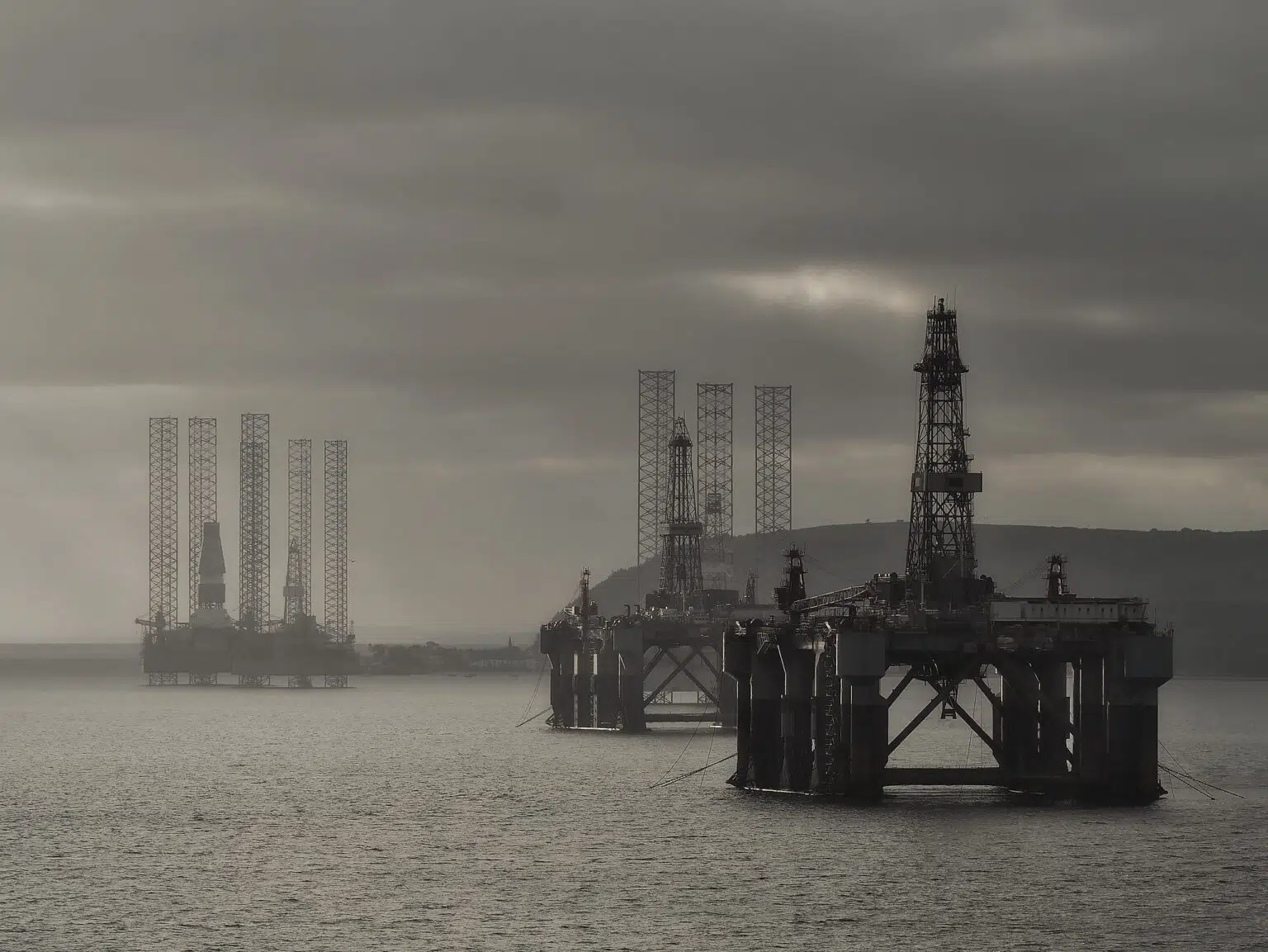
A North Sea oil rig. Credit: Gary Bembridge / FlickrCC BY 2.0

Fossil fuel giants are largely left to submit their own extraction and emissions data, a freedom of information request shows.

The main regulator of North Sea oil and gas doesn’t conduct physical inspections to ensure companies operating in the region are following the rules, DeSmog can reveal.

The revelations, labelled “deeply troubling” by campaigners, come as the government and the regulator, the North Sea Transition Authority (NSTA), have announced plans to approve drilling at a new oil field, Rosebank, that could produce 69,000 barrels of oil and 44 million cubic feet of gas a day.

DeSmog filed a freedom of information request (FOI) to the NSTA asking the regulator how it ensured companies stayed within the oil and gas extraction maximums outlined in their licences. These rules govern, among other things, how much oil and gas companies are allowed to extract, and the amount of emissions they can produce in the process.

In its response, the NSTA told DeSmog that a company “must notify” the NSTA if a production limit is breached in the North Sea, but that the NSTA itself “does not undertake offshore inspections to ensure compliance with production consents”.

When asked how, given the lack of inspections, the regulator would ensure that companies are being accurate when they self-report the emissions being produced, the regulator said it hosted “an annual consents exercise” (seemingly a single meeting) during which they remind operators of “their obligations and how to ensure they remain in regulatory compliance”.

The findings suggest that operators in the North Sea are left to largely self-regulate – declaring themselves when they break the legal rules governing their operations.

According to Violation Tracker UK, the NSTA has issued just two fines worth £100,000 since 2021 related to companies exceeding the oil and gas extraction limits in their licence.

“This FOI reveals deeply troubling findings about the lack of proper regulation of North Sea oil and gas extraction,” said Matthew Lawrence, the director of the Common Wealth think tank.

Daniel Jones, a researcher at the campaign and research group Uplift, added that The NSTA has never acted like a regulator in the normal sense, preferring to steer and encourage the industry into behaving responsibly, rather than mandating that companies reduce their environmental impact.

“It’s only very recently, in 2021, that the NSTA introduced any mechanisms at all to tackle the huge emissions from producing oil and gas, which account for 4 percent of all UK emissions, and even these require companies to do very little”.

‘Light Touch Regulation’

The NSTA, formerly the Oil and Gas Authority, is a private company wholly owned by the government, which primarily seeks to “maximise” the economic output of North Sea oil and gas, and aid the transition to net zero.

This month, the company awarded the UK’s first ever licences for carbon capture and storage (CCS), which it said “could store up to 30 million tonnes of CO2 per year”. However, the role of CCS in the energy transition is hotly contested. 

Climate scientists point to the failure of CCS to remove significant amounts of CO2 emissions, while campaigners warn of the high costs compared to renewable energy. The vast majority of companies also use the captured CO2 to extract more oil through a process called “enhanced oil recovery”.

Stuart Haszeldine, professor of carbon capture and storage at the University of Edinburgh, has compared commissioning CCS sites as well as new oil fields to ordering a truckload of cigarettes for someone giving up smoking.

DeSmog’s new findings also raise concerns about the monitoring of illegal flaring – the burning of excess natural gas produced during the oil and gas drilling process, which produces hundreds of millions of tonnes of CO2 emissions a year.

According to Violation Tracker UK, the NSTA has issued two fines for flaring since 2021, worth a total of £215,000.

In 2022, £65,000 fine was imposed on Equinor, the firm that owns much of the new Rosebank oilfield. Two years prior, Equinor had flared at least 348 tonnes of CO2 over and above the amount it was permitted to burn. Even that failure was considered an “administrative breach” by the NSTA. In the first six months of 2023, the Norwegian-owned energy company posted profits of £17.1 billion.

The UK’s operations in the North Sea produce almost three times the direct greenhouse gases per barrel of oil than our neighbour Norway, largely due to a significantly higher use of flaring on UK-regulated oil rigs. In 2022, UK North Sea operations burned 22 billion cubic feet of gas in offshore flaring.

DeSmog’s findings come just days after the NSTA announced it was approving plans for the Rosebank oilfield, with a government minister claiming the move would lead to “lower emissions” in the UK.

The field has the potential to produce 500 million barrels of oil in its lifetime, which when burned would emit as much carbon dioxide as running 56 coal-fired power stations for a year.

Campaigners including Greta Thunberg have expressed their anger at the proposals, with Green Party MP Caroline Lucas describing the project as “the greatest act of environmental vandalism in my lifetime”.

The government has also said it will imminently issue hundreds of new licences for oil and gas exploration in the North Sea, while Prime Minister Rishi Sunak has announced the watering down of several key net zero targets.

The International Energy Agency warned in May 2021 new fossil fuel developments were incompatible with the effort to limit global temperature increases to 1.5C above pre-industrial levels.

There are currently 283 active oil and gas fields in the North Sea, and the production process alone generated 13.1 million tonnes of direct CO2 emissions in 2019.

Matthew Lawrence of Common Wealth added that, “Decades of light touch regulation and privatisation have led to an energy system – from North Sea extraction to the super profits being made in energy generation and distribution – geared toward profit maximisation at the expense of people and planet.

“In this context, the government’s decision to approve the Rosebank oilfield and issue 100 new licences for fossil fuel extraction pose an even more grave risk to the climate.

“The alternative is a clean energy system based around meeting public and environmental needs”.

A spokesperson for NSTA did not address any of the findings in the freedom of information request, but stressed that the majority of flares “are fitted with metres” and the group is working to “increase the use of direct measurements”.

They added that government departments receive “actual emission data” on North Sea oil operations and that the NSTA was “working with [the Offshore Petroleum Regulator for Environment and Decommissioning] to improve the visibility of this data and help industry increase the accuracy of emissions measurement”.

Original article by Andrew Kersley republished from DeSmog.

Continue Reading‘Deeply Troubling’ Lack of UK North Sea Oil and Gas Monitoring

‘Gleefully Encouraging the Arsonists’: UK Government Commits to More Fossil Fuel Drilling

Spread the love

Original article by JAKE JOHNSON republished from Common Dreams under Creative Commons (CC BY-NC-ND 3.0).

“The U.K. government is blatantly in denial about climate breakdown.”

U.K. Prime Minister Rishi Sunak announced Monday that his government will approve hundreds of new licenses for oil and gas drilling in the North Sea, drawing anger from climate advocates who say he’s doing the bidding of the fossil fuel industry amid a nightmarish wave of extreme weather.

Paying lip service to the nation’s net-zero emissions target, the Tory leader also laid out plans for two new carbon capture and storage facilities in Northeast Scotland and the Humber, lining up behind an oil industry-backed approach to reining in pollution that critics say is a false solution to the global climate crisis.

“Burning oil and gas is driving extreme weather and killing people on every continent, yet Rishi Sunak is gleefully encouraging the arsonists to go and put more fuel on the fire,” said Mary Church, a campaigner with Friends of the Earth Scotland. “By committing to future licensing rounds on the same day, it’s clear to see that carbon capture is little more than a greenwashing tactic by Big Oil to try and keep their climate-wrecking industry in business.”

Major fossil fuel giants such as Shell and BP have maintained oil and gas facilities in the North Sea for years. According to a recent analysis by Greenpeace, oil and gas licenses approved by the U.K. government over the past two years are set to generate as much carbon dioxide as Denmark emits annually—roughly the equivalent of 14 million cars.

“History will view this as an act of gross criminality. Our future sacrificed for the profits of a tiny elite.”

Philip Evans of Greenpeace U.K. said Monday that Sunak’s new announcements are “nothing but a cynical political ploy to sow division, and the climate is collateral damage.”

“Just as wildfires and floods wreck homes and lives around the world, Rishi Sunak’s government has decided to row back on key climate policies, attempted to toxify net zero, and recycled old myths about North Sea drilling,” said Evans. “Relying on fossil fuels is terrible for our energy security, the cost of living, and the climate. Our sky-high bills and recent extreme weather have demonstrated that.”

“Rishi Sunak knows that any oil and gas from the North Sea will just be sold on the international market, making oil companies even richer at the expense of the rest of us. How will this help our bills exactly?” Evans asked, countering the prime minister’s claims that new drilling will enhance the U.K.’s “energy security.”

“If Sunak were serious about boosting our energy security while keeping energy bills down,” Evans continued, “he’d remove the absurd barriers holding back cheap, homegrown renewables and launch a nationwide insulation program to tackle energy waste in our homes.”

Nick Dearden, director of the U.K.-based advocacy group Global Justice Now, wrote that “history will view this as an act of gross criminality. Our future sacrificed for the profits of a tiny elite.”

“The talk of securing our independence couldn’t be further from the truth,” Dearden added. “This leaves us on the hook for £billions, even if the next govt rescinds these contracts, as they must, the fossil fuel elite will pocket a fortune at our expense.”

In addition to the new drilling license commitments, the Financial Times reported Sunday that the U.K. government has “made it cheaper for industry to pollute in Britain compared with the E.U. by watering down reforms to the carbon market.”

“The U.K. government is blatantly in denial about climate breakdown,” said Church.

Original article by JAKE JOHNSON republished from Common Dreams under Creative Commons (CC BY-NC-ND 3.0).

Continue Reading‘Gleefully Encouraging the Arsonists’: UK Government Commits to More Fossil Fuel Drilling

The climate credentials of Rishi Sunak’s cabinet :: Keir Starmer

Spread the love

While Keir Starmer is leader of the UK Labour Party and therefore notionally supposedly opposed to Rushi Sunak’s cabinet and government, he’s a Tory pretending to be a Socialist, a red Tory.

https://youtu.be/DDEdFxUZ01s

Keir Starmer has abandoned every one of his Socialist ‘pledges’ on taking over the Labour Party. Included in these pledges is

3. Climate justice

Put the Green New Deal at the heart of everything we do. There is no issue more important to our future than the climate emergency. A Clean Air Act to tackle pollution locally. Demand international action on climate rights.

https://www.theguardian.com/politics/2023/feb/23/keir-starmer-denies-abandoning-labour-leadership-pledges

… He denied that the 10 promises he made during the 2020 race to succeed Jeremy Corbyn had been abandoned and insisted they remained “important statements of value and principle”.

However, Starmer refused to confirm that he stood by several of them, including public ownership of utilities and rail services and the abolition of university tuition fees.

He has been repeatedly criticised by some on the left of the party who accuse him of shifting away from the platform he stood on three years ago.

Challenged on BBC Radio 4’s Today programme over whether voters could trust him to deliver the five new national missions, Starmer said the pledges made during his Labour leadership bid “haven’t all been abandoned by any stretch of the imagination”.

He said: “What I’ve had to do is obviously adapt some of them to the circumstances we find ourselves in. Since I ran for leader, we’ve had Covid. Since I ran for leader, we’ve had the conflict in Ukraine. Since I ran for leader, we’ve had a government that’s done huge damage to our economy.” …

On climate commitments specifically,

9 Jun 2023 Labour postpones £28bn green plan as it seeks to be trusted on public finances

… Labour has scaled back plans to borrow £28bn a year to invest in green jobs and industry as the party’s leadership looks to review its spending in an attempt to prove its fiscal credibility.

The shadow chancellor, Rachel Reeves, delayed plans for a green prosperity fund to start in the first year of a Labour government, saying it would “ramp up” by the middle of a first parliament.

She said the decision had to be taken as a result of the poor economic backdrop and rising interest rates, after Liz Truss’s short premiership crashed the markets last autumn. …

18 Jun 2023 Keir Starmer to ‘throw everything’ at plan to get UK to net zero

… Keir Starmer will pledge to “throw everything” at net zero and the overhaul of the UK’s energy system and industries, promising new jobs in “the race of our lifetime” to a low-carbon future.

The Labour leader will seek to regain the initiative on his plan for green growth on Monday, having rowed back earlier this month on a pledge to invest £28bn in a green industrial strategy, a figure that will not now be reached until the second half of a Labour parliament, as well as damaging rows with trade unions over the future of the North Sea.

Announcing a package of policies designed to decarbonise the energy system and industry, Starmer will say: “We’re going to throw everything at this: planning reform, procurement, long-term finance, R&D, a strategic plan for skills and supply chains … Pulling together for a simple, unifying priority: British power for British jobs.” …

This is when the Tories started accusing Labour of pursuing Just Stop Oil policies. “Grant Shapps, the energy secretary, accused the Labour leader of being “the political wing” of Just Stop Oil.” There’s also actually a suggestion of terrorism in Grant Shapp’s comment … that phrase.

His team also rebuffed suggestions of a U-turn on the North Sea oil ban. Rescinding permission for projects that have cleared all regulatory hurdles before the general election would be costly and legally complex, so the party’s proposed ban on new oilfields will not cover projects that have achieved all three levels of consent, for exploration, development and production.

It is unlikely that many of the more than 100 North Sea licences the government is mulling would fall into that category, though one of the biggest – the Rosebank oil and gas field – could clear the final regulatory hurdles soon.

It’s not possible to get to Net Zero if Rosebank is permitted. Just like everything else, Keir Starmer and the Labour party can’t be trusted on the climate.

Which is why he gets heckled by climate protestors

Continue ReadingThe climate credentials of Rishi Sunak’s cabinet :: Keir Starmer

Congratulations to Rishi Sunak

Spread the love
Congratulations to Rishi Sunak on becoming UK's prime minister today. 

His short-lived predecessor Liz Truss was not only in denial of the climate crisis but was actually actively hostile to renewable energy. Even though she only served 45 days, she imposed a windfall tax on renewables and nuclear energy only and promoted exploitation of oil and gas in the North Sea by issuing new exploration licences. [I am not supportive of nuclear energy.] 

The climate is in crisis. It's deteriorating and we're regularly breaking temperature records in UK despite so-far having it very easy compared to the rest of the World. It can't be simply denied as the Tories have been doing.  Denial of the climate crisis is insane. It's going to get worse and extreme protests like closing the M25 are going to increase, the idea being that the protestors are stopping normal conduct of life that is killing the planet. 

Hopefully Rishi will tax the rich to pay for public services. He should know - through being filthy rich - that they're not even going to notice it. 
Continue ReadingCongratulations to Rishi Sunak

UK defies climate warnings with new oil and gas licences

Spread the love

https://www.bbc.com/news/science-environment-63163824

The UK has opened a new licensing round for companies to explore for oil and gas in the North Sea.

Nearly 900 locations are being offered for exploration, with as many as 100 licences set to be awarded.

The decision is at odds with international climate scientists who say fossil fuel projects should be closed down, not expanded.

They say there can be no new projects if there is to be a chance of keeping global temperature rises under 1.5C.

Continue ReadingUK defies climate warnings with new oil and gas licences