After the “Iron Wall”: Israel launches another large-scale operation in northern West Bank

Spread the love

Original article by Aseel Saleh republished from peoples dispatch under a Creative Commons Attribution-ShareAlike 4.0 (CC BY-SA) license.

IOF soldiers carrying out a raid in Jenin, in January 2025, as part of Operation Iron Wall. Photo: IOF Spokesperson’s Unit

The IOF claims that the extensive military campaign aims to crackdown on new Palestinian armed resistance groups in the making.

After Israel’s 10-month “Iron Wall” operation in the northern governorates of the occupied West Bank had failed to eradicate Palestinian resistance, the Israeli Occupation Forces (IOF) launched yet another extensive military campaign on Wednesday, November 26, targeting the same areas.

The IOF and the Israel Security Agency (known as Shin Bet) said in a joint statement on Wednesday morning, that the new operation aims to prevent emergent Palestinian resistance groups from being established in several areas in the northeast of the West Bank, including Tubas, Tammun, and Aqaba.

According to Israeli newspaper Yedioth Ahronoth, the intensive military action involves three IOF brigades, forces from the Commando Brigade, Samaria and Menashe regional brigades, Shin Bet agents and Border Police officers.

The Israeli Air Force is also taking part in the operation by carrying out strikes “to isolate and seal off” the targeted areas.

The broad assault expanded to the northern governorate of Jenin on Wednesday night, resulting in the killing of Osama Kameel (20) in Qabatia town.

On Thursday, November 27, the IOF announced that the Israeli Air Force targeted seven sites allegedly used as hideouts by resistance groups in different parts of the West Bank with airstrikes.

Furthermore, over 220 sites were searched, dozens of Palestinians were interrogated and several others were detained.

Citing the Israeli Army Radio, Palestinian Ma’an news agency reported that the Israeli forces assassinated three Palestinian resistance fighters during a raid in the neighborhood of Jabal Abu Dhuhair, in the outskirts of Jenin refugee camp on Thursday. However, the identities of the slain Palestinian men have not been revealed yet.

The operation was preceded by bloody days across the West Bank

Israel’s new wide-scale offensive followed some of the bloodiest days across the West Bank, during which the IOF had murdered a number of Palestinian youths.

On Friday, November 21, Israeli soldiers shot dead Amr Al-Marboua (18), and Sami Mashaikha (16) during a military incursion in the town of Kafr Aqab, north of occupied Jerusalem.

Palestinian police officer Younis Shtayyeh (24) was also killed by the IOF on Friday, in the town of Tell near the northern West Bank city of Nablus.

On Sunday, November 23, Adel Qazzaz (26) succumbed to injuries he sustained after being shot by Israeli troops days earlier in Dura town, in the West Bank southern governorate of Hebron.

That same day saw the killing of Baraa Maali (20) at the hands of the IOF, while he was confronting an attack by illegal Israeli settlers on the village of Deir Jarir northeast of the Ramallah and Al-Bireh governorate, in the central occupied West Bank.

“Resistance is a viable and continuous effort”

The current Israeli military campaign in the northern West Bank marks a crucial development, because it has once again confirmed the determination of the Palestinian people to continue resisting Israel as a fascist occupying power.

Analysts claim that while Netanyahu’s government has relentlessly sought to resolve the Arab-Israeli conflict by waging a brutal indefinite multi-front war across West Asia, its goal seems to be far from attainable, as facts on the ground show that the peoples of the region continue to support the path of resistance.

This approach brings to mind the legacy of late Palestinian resistance icon and writer, Basel Al-Araj, who once said: “Resistance is a viable and continuous effort”.

Original article by Aseel Saleh republished from peoples dispatch under a Creative Commons Attribution-ShareAlike 4.0 (CC BY-SA) license.

Experiencing issues with this image not appearing. I suspect because it's so critical of Zionist Keir Starmer's support of and complicity in Israel's genocides.
Genocide denier and Current UK Prime Minister Keir Starmer is quoted that he supports Zionism without qualification. He also confirms that UK air force support has been essential in Israel’s mass-murdering genocide. Includes URLs https://www.declassifieduk.org/keir-starmers-100-spy-flights-over-gaza-in-support-of-israel/ and https://youtu.be/O74hZCKKdpA
Keir Starmer objects to criticism of the IDF. He asks how could anyone object to them starving people to death, forced marches like the Nazis did, bombing Gaza's hospitals and universities, mass-murdering journalists, healthworkers and starving people queuing for food, killing and raping prisoners and murdering children. He calls for people to stop obstructing his genocide for Israel.
Keir Starmer objects to criticism of the IDF. He asks how could anyone object to them starving people to death, forced marches like the Nazis did, bombing Gaza’s hospitals and universities, mass-murdering journalists, healthworkers and starving people queuing for food, killing and raping prisoners and murdering children. He calls for people to stop obstructing his genocide for Israel.
Orcas discuss Genocide-supporting and complicit Zionists. Donald Trump, Keith Starmer, David Lammy, Rachel Reeves, Angela Rayner and Wes Streeting are acknowledged as evil genocide-complicit and supporting cnuts.
Continue ReadingAfter the “Iron Wall”: Israel launches another large-scale operation in northern West Bank

Fidel Castro’s final reflections

Spread the love

Original article by Pablo Meriguet republished from peoples dispatch under a Creative Commons Attribution-ShareAlike 4.0 (CC BY-SA) license.

Cuban revolutionary leader Fidel Castro in 2014. Photo: Wikimedia Commons

Nine years after his death, we look back at some of the most relevant themes in Fidel Castro’s final writings after stepping down as President of Cuba.

Fidel Castro is often remembered as one of the most iconic leaders of the 20th century. Despite Washington’s unrelenting attempts to overthrow and even assassinate him, Fidel continued his rule and the development of the Cuban Revolution, which began in 1959 after the overthrow of Fulgencio Batista.

Much is written on his reflections on the development of the revolutionary struggle in the second half of the 20th century, his emblematic speeches, and his universal vision that combined the best of Leninist pragmatism with the sharpness of anti-colonial critical thinking. But Fidel’s vision of the future of humanity during his last years of life, an activity that demanded many hours of reading and writing, is often overlooked.

Read more: Fidel

In fact, Fidel resigned as President of Cuba in 2008, with the aim of ensuring that the transition to another leader would not jeopardize the existence of the Cuban Revolution; many believed that after his death, the Communist Party of Cuba’s government would collapse.

And while many said that Fidel continued to lead the country after his resignation, the truth is that his production of essays and articles increased exponentially. Foreign policy, ecology, coups d’état, and even reflections on baseball and sports were all topics that Castro covered in his copious written work, generally published in Cuban and international newspapers.

The right to live

Fidel insisted that if human beings continued down the path of savage capitalism, they would bring about the end of their own existence. For Fidel, climate change was not only a transformation of certain environmental aspects, but also the destruction of human existence: “Continuing the battle and demanding at all meetings, particularly those in Bonn and Mexico, the right of humanity to exist… is, in our opinion, the only way forward.”

Here Fidel took a stance far removed from any short- or medium-term ideological dispute to adopt a long-term vision, according to which human beings have been incapable of properly managing a legacy of billions of years once they appeared on Earth: “[Human beings] benefit from a fabulous legacy of 4 billion years provided by the Earth… They are only 200,000 years old, but they have already changed the face of the world.”

Furthermore, he found any kind of military spending deeply inappropriate in the face of the inexorable arrival of the end of humanity. “The world is suffering the consequences of climate change at the same time;… A war was the most inappropriate thing that could happen at this time.”

The nuclear danger

Few people knew more about an almost imminent nuclear war than Fidel Castro. During the Cuban Missile Crisis, the world was on the brink of self-destruction. This concern never left Castro, when he warned of the massacre that would take place years later in Palestine: “As soon as the warships of the United States and Israel take their positions… the terrible war will begin.”

Furthermore, he clearly understood that a large-scale war, especially a nuclear one, would not transform the balance of power between social classes. Thus, he warned that after such a war, only “the administration of goods and services” would remain, and it would be carried out by the same elites that currently exist.

Imperialism as a method of domination

Fidel never abandoned the idea that imperialism continued to be the capitalist system’s most refined method for extracting value and subjugating the peoples of the Third World. Militaristic policy, the essence of imperialism, could never abandon its development, even at the expense of other more pressing needs.

He emphasized that in 2008, 42% of global spending was on military expenses: “While USD 1.5 trillion is spent on defense, the number of hungry people in the world reaches 1 billion.” This disparity was no accident, but rather a strategy executed by the great powers, under the pretext of defense cooperation, to impose economic programs and projects that further dispossess Third World countries. Thus, he openly criticized Obama’s foreign policy for Latin America as a ploy to control the Amazon

Science and technology

Fidel’s Marxism could not ignore the impressive technological transformation that took place during the first decades of the 21st century. In this sense, his reflections often focused on the use that transnational companies were making, and could make, in the field of production.

“If robots in the hands of transnational corporations can replace imperial soldiers in wars of conquest… (they can) flood it with robots that displace millions of workers.” Thus, Fidel announced a new process of dispossession of labor, as carried out by the merchant bourgeoisie at the dawn of the Modern Age.

Thus, technology, climate change, imperialism, and so on, could give the impression of rampant pessimism. However, thinking that could be a mistake. It is true that there was a great deal of caution and concern in Fidel’s final reflections, but this should not be confused with a renunciation of collective struggle.

Castro’s final texts always called for organization, for not giving up the strength of will, for continuing to think and work toward another future, one that is not at the mercy of the designs of a few. In short, as Romain Rolland stated and Gramsci popularized, Fidel’s thinking perfectly executed the maxim “Pessimism of the intellect, optimism of the will.”

Original article by Pablo Meriguet republished from peoples dispatch under a Creative Commons Attribution-ShareAlike 4.0 (CC BY-SA) license.

Continue ReadingFidel Castro’s final reflections

Jeremy Corbyn: it’s time for a party to empower the people

Spread the love

https://morningstaronline.co.uk/article/jeremy-corbyn-its-time-party-empower-people

 Jeremy Corbyn, with Zarah Sultana (not pictured) speaking at a discussion on Your Party, their new political party, at The World Transformed conference, at Niamos Radical Arts Centre in Hulme, Manchester, October 10, 2025

With ‘Your Party’ holding its founding conference in Liverpool this weekend, JEREMY CORBYN speaks to Morning Star editor Ben Chacko about its potential, its priorities — and a few of its controversies too

JEREMY CORBYN says the Palestine solidarity movement is a game changer in British politics.

“The Palestine movement is absolutely huge. And like the movement against the Vietnam war of the 1960s, which had a huge impact on political thinking — the rather fossilised structure of both major parties started to disintegrate after that — it means things have to change.”

It’s one of the reasons he says the time is right for a new mass party of the left. “Your Party,” as it is provisionally known, has its founding conference this weekend.

“In my estimation at least two million people in Britain have done something about Palestine over the past 18 months — attend demonstrations, marches, meetings, sent emails, signed petitions.

“A lot of people are coming together on Palestine and at all the Palestine events I’ve been at there’s been a huge interest in the idea of a new party.”

Corbyn, meeting the Morning Star in his Westminster office, isn’t saying one issue would be enough to build a mass movement for change on — but the immense public anger at our Establishment’s complicity in a genocide is a galvanising moment.

One that comes at a time ripe for Labour to be challenged from the left.

“Labour has lost all appeal to the radical sections of the population.” And that, today, means a lot of people.

“Nobody really believes the left are going to be back in power in the Labour Party, because of the structural changes Starmer has brought in,” says Corbyn. Changes everyone knows are intended to prevent anything like Corbyn’s own 2015-20 leadership of the party happening ever again.

“Now is the time for a left party in the tradition of the labour movement. That is where I see myself. I am not leaving the labour movement. I am helping form a political party which will be part of the labour movement.

“We must challenge the ‘triopoly’ of the Tories, Labour and Lib Dems on political, social, environmental and economic thinking. They all believe in austerity, they all believe in market economics, they’re all running away from addressing the environmental crisis and on social justice issues.

“Labour had a ‘loveless landslide’ just over a year ago in the election. A spectacularly low vote for a party moving into government.” Corbyn points out that, while “we didn’t win either election, I fully appreciate that,” the highest Labour votes at general elections this century were both under his leadership, in 2017 and 2019. An important reminder that the idea socialist policies are unpopular at the ballot box is a media-manufactured myth.

Since coming to power Starmer’s government has been “disastrous. Maintaining the two-child benefit cap [finally lifted a day after we spoke], trying to take away the winter fuel allowance, attempting to remove personal independence payments from disabled people.”

On housing, he slams Labour’s refusal to take on the private rental sector or stand up to for-profit builders, who have a stranglehold on construction and resist efforts to include social and council housing in new builds.

He also ties the government’s decision to ramp up military spending to “effective cuts to every other area of public spending.” The government claims it’s increasing spending on the NHS, but he points out that two hospitals near him in north London are cutting spending by £20 million — and all over the country similar cuts are taking place across hospital trusts.

The increased military budget covers “a new generation of nuclear weapons and for the first time since the 1960s airborne nuclear bombs being stationed in Britain. There is no agenda for anything other than war.” And back to the trigger issue, Gaza: “A Labour government has carried on selling arms to Israel while a genocide is going on.”

The appetite for a party that will challenge all this is obvious. But a lot has changed on the British left since Your Party was first announced in July. Most notably, under a new leader, Zack Polanski, the Greens have shifted dramatically left and exploded in size, with many of those joining believed to be from the same 800,000 people who expressed interest in Your Party. Is another left party needed in that context, and isn’t the left becoming a crowded field?

“I want to be part of a socialist party — one fundamentally about social and economic transformation. I agree with a lot of what the Greens say, especially on environmental issues, and will work with them. Just last night I was working with the Greens on an amendment to the English Devolution Bill.

“But this is at root about public ownership and workers’ control.

Article continues at https://morningstaronline.co.uk/article/jeremy-corbyn-its-time-party-empower-people

Keir Starmer objects to criticism of the IDF. He asks how could anyone object to them starving people to death, forced marches like the Nazis did, bombing Gaza's hospitals and universities, mass-murdering journalists, healthworkers and starving people queuing for food, killing and raping prisoners and murdering children. He calls for people to stop obstructing his genocide for Israel.
Keir Starmer objects to criticism of the IDF. He asks how could anyone object to them starving people to death, forced marches like the Nazis did, bombing Gaza’s hospitals and universities, mass-murdering journalists, healthworkers and starving people queuing for food, killing and raping prisoners and murdering children. He calls for people to stop obstructing his genocide for Israel.
Orcas discuss Genocide-supporting and complicit Zionists. Donald Trump, Keith Starmer, David Lammy, Rachel Reeves, Angela Rayner and Wes Streeting are acknowledged as evil genocide-complicit and supporting cnuts.
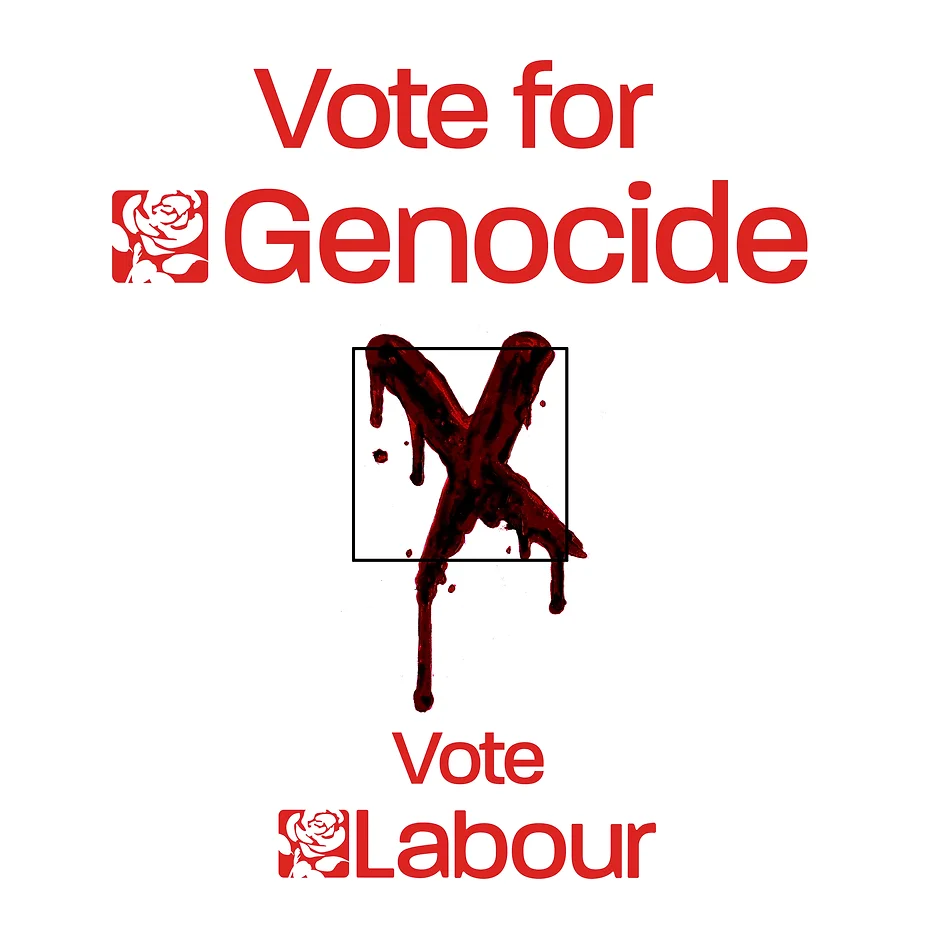
Vote Labour for Genocide.
Continue ReadingJeremy Corbyn: it’s time for a party to empower the people

From Palestine to Venezuela: The US is behind the door

Spread the love

Original article by Aseel Saleh republished from peoples dispatch under a Creative Commons Attribution-ShareAlike 4.0 (CC BY-SA) license.

Massive march in Caracas, Venezuela on Saturday October 5, 2024 to commemorate the one year anniversary of Israel’s genocide. Photo: Francisco Trias

Palestinian journalist Aseel Saleh reflects on the US attempts to destabilize nations across the world to achieve its interests, focusing on the current threats on Venezuela, a stalworth supporter of the Palestinian cause.

From Hiroshima and Nagasaki in 1945, to the war against Vietnam between 1955 and 1975, the war in Afghanistan from 2001 to 2021, the invasion of Iraq in 2003, and countless more in between, the US war machine has claimed the lives of millions of people around the globe without batting an eye, using false pretexts every time.

This brutal machine has continued its lethal operations in subsequent periods, even if not directly, by fueling and igniting proxy wars in West Asia, during the Arab revolts, primarily in Syria and Yemen.

Providing Israel with unwavering military support, has also been a central strategy of the bellicose empire, through which it has tightened its grip on the region, since the Zionist state was established in 1948.

Wherever massacres and mass destruction exist, the US is definitely there. This is reminiscent of the words that Palestinian poet Mahmoud Darwish wrote, decrying the US complicity in the Lebanese civil war (1975-1990).

Despite not apparently having a direct role in the conflict then, the US supplied Israel with aircrafts and cluster bombs, which the latter used to commit horrific war crimes across Lebanon.

Darwish said:

“The US is atop the wall giving each child a cluster-death toy as a gift,

Oh you, the Hiroshima of the Arab lover (Beirut), the US is the plague, and the plague is the US.

We fell asleep, the aircrafts and the US awaken us,

and the US is only for the US,

while this horizon has become a cement for the aerial monster.

We open the sardines can, it gets shelled by canons.

We hide behind the curtains, the building shakes, the doors jump.

The US is behind the door, behind the door is the US.”

From Gaza to Venezuela, the US is still behind the door

The US was, is, and will always be behind the door of any country where it has economic or geopolitical interests. US President Donald Trump has acted like a landlord during his first and second terms, feeling entitled to take over the wealth of whatever nation he chooses, or expand his real estate empire anywhere he finds adequate.

Trump’s avarice has no limits, to an extent that has made his administration not only complicit, but a partner in Israel’s horrendous genocide in the Gaza strip and the deliberate starvation of the population. For him, the killing of over 70,000 Palestinian is insignificant as long as the genocide would make his dream of turning Gaza into “the Riviera of the Middle East” true, due to its distinctive seafront on the Mediteranean.

Perceiving Gaza as a great potential for an illusionary real estate project, does not seem to be the only motivation for Trump to support Israel in its genocidal aggression. Media reports indicate that Gaza is rich with offshore natural gas, valued at up to USD 4 billion per year.

Taking over Gaza and its gas reserves will not be possible with the presence of the Palestinian grassroots and resistance groups, who have confronted the Israeli occupation and its US-supported colonial project in the region. Thus, launching a merciless war against the besieged enclave was the only way for the US to achieve these goals.

It is the same imperialist equation when it comes to the US aggression on Venezuela. Although the Trump administration claimed that it is waging a war against the Latin American country due to its alleged involvement in narcotic trafficking in the Caribbean sea, no evidence has been provided to validate the claim.

Read More: US deploys aircraft carrier and threatens invasion of Venezuela

Analysts suggest that the planned invasion is politically and economically motivated. The US is attempting to overthrow Venezuelan President Nicholas Maduro, the leader of the anti-imperialist Bolivarian revolution that will never allow the US to exploit the country’s oil wealth, or become subordinate to it.

The US has repeatedly threatened to take military action directly against Venezuela after failing to subjugate the nation, despite imposing a crushing sanctions regime on it for many years. This was followed by unsuccessful bids to ignite infighting and destabilize the country through a US-guided violent opposition led by María Corina Machado.

Israel has implemented a similar strategy to pressure the Palestinian resistance in Gaza to lay down arms and surrender by imposing a stifling siege on the enclave since 2007, 16 years before it launched its two-year genocidal aggression on October 7, 2023. It has also enhanced the division between the two major Palestinian factions, Fatah and Hamas, to undermine unity and spread chaos between Palestinians.

The Palestinian cause is Bolivarian

Both Palestinians and Venezuelans are fully aware that their struggle is the same in its confrontation with US-led Western imperialist hegemony and fascism. A concept which late Venezuelan President Hugo Chávez had always emphasized not only in words, but with actual continued support to the Palestinian people and their just cause.

“The Bolivarian revolution from day one stood by the side of the Palestinian people in their memorable struggle against the genocidal state of Israel that tramples on, kills and seeks to exterminate the Palestinian people,” Chávez said as he received Palestinian President Mahmoud Abbas in Venezuela’s capital Caracas in 2009.

“The struggle for Palestine is a first-order struggle for the homeland of the Liberator (Simón Bolívar) and the Bolivarian revolution.” He added.

Maduro has maintained Chavez’s legacy of solidarity with the Palestinian cause, which he considers as “the most sacred cause of humanity”. It has also been a daily concern of the Venezuelan people, who hold it deep in their heart.

Therefore, it is time for Palestinians, alongside internationalists and all people of conscience, to unite and rally around Venezuela in defense of its independence and sovereignty, because the defeat of one nation by imperialism undermines the will of all other nations.

Late Palestinian resistance leader Fathi Shaqaqi once said: “It is a war of genocide that has been imposed on us, during which it is a shame to fight dispersedly. It is either that we rise up together, or they will eliminate each one of us individually.”

Original article by Aseel Saleh republished from peoples dispatch under a Creative Commons Attribution-ShareAlike 4.0 (CC BY-SA) license.

Donald Fuhrump says that Amerikkka doesn't bother with crimes or charges anymore, not being 100% Amerikkkan and opposing his real estate intentions is enough.
Donald Fuhrump says that Amerikkka doesn’t bother with crimes or charges anymore, not being 100% Amerikkkan and opposing his real estate intentions is enough.
Continue ReadingFrom Palestine to Venezuela: The US is behind the door

Twenty years after “No to the FTAA”, Latin American movements reaffirm their anti-imperialist commitment

Spread the love

Original article by Pablo Meriguet republished from peoples dispatch under a Creative Commons Attribution-ShareAlike 4.0 (CC BY-SA) license.

In 2005, in the city of Mar del Plata, the presidents of the brother countries of the Americas, Lula da Silva, Hugo Chávez, Evo Morales, and Néstor Kirchner stood firm against the United States. Photo: X

The meeting in Mar del Plata paid tribute to the moment when several Latin American presidents defeated the US attempt to establish a regional free trade agreement.

In the same place where the regional free trade project was “buried” two decades ago, 150 delegates from various social movements in Brazil, Uruguay, Bolivia, Cuba, Mexico, Portugal, Haiti, Palestine, Chile, Nicaragua, Peru, and Paraguay gathered to reaffirm the anti-imperialist spirit that led to the regional rejection of the FTAA project, they say.

“The world faces greater levels of inequality, injustice, and authoritarianism, with a growing concentration of financial and technological power that deepens poverty and limits the autonomy of countries in the Global South,” the delegates said in the event’s final declaration.

The meeting was also attended by the governor of Buenos Aires, Axel Kicillof, who stated that the rejection of the FTAA in 2005 was a “new declaration of independence” for Latin American countries. “The rejection of the FTAA was a victory for Latin American sovereignty, voiced by a group of presidents with enormous courage, represented in our country by Néstor Kirchner. Twenty years after that historic milestone, we have a responsibility to continue building unity, because there is no possibility of development for our countries outside the framework of regional integration. We cannot afford not to have a project on behalf of our people, because Argentina and the countries of Latin America are not anyone’s backyard,” Kicillof wrote in X.

Peoples Summit No al ALCA
Delegates from dozens of Latin American countries reaffirm the anti-imperialist spirit of the “No to the FTAA” summit in 2005.

For his part, the Secretary of Foreign Affairs of the Argentine Workers’ Central Union (CTA), Adolfo Aguirre, stated: “In this very place, in front of the President of the United States, George W. Bush, and before the eyes of the whole world, our peoples, workers, together with leaders such as Néstor Kirchner, Hugo Chávez, and Luiz Inácio Lula da Silva, marked a turning point. We said no to surrender, no to dependence, no to the model that wanted to turn our America into the backyard of economic power.”

Twenty years ago, the anti-imperialist slogan was born

Twenty years ago in Argentina, several political leaders from the Latin American left gathered at a People’s Summit, whose fundamental slogan was the rejection of the Free Trade Area of the Americas (FTAA), an initiative promoted, among others, by the George W. Bush administration. The FTAA sought to significantly reduce customs barriers between American countries.

According to popular and left-wing forces in Latin America and the Caribbean, the agreement would have promoted a regional market in which the United States would have had an enormous advantage over other countries and which, in the long run, would have led to the destruction of the still immature regional industry to benefit the interests of large US companies.

However, the economic and geopolitical project did not prosper due to fierce and coordinated opposition from several Latin American presidents, including Néstor Kirchner (Argentina), Hugo Chávez (Venezuela), and Luiz Inácio Lula da Silva (Brazil), among others. The political maneuver took place in Mar del Plata, during the Summit of the Americas, where Bush and his entourage suffered a severe setback. Thus, the proposal that had been in the works and planned since 1994 in Miami and was definitively defeated.

The Summit of the Americas is considered by several experts to be a turning point in the geopolitical relations of the American continent. New progressive and pro-sovereignty processes joined those of Argentina, Brazil, and Venezuela, giving rise to an attempt at regional integration that to this day is pushed by progressivism and boycotted by Washington’s neoliberal allies.

While the summit was taking place, thousands of people from left-wing and progressive movements and political parties gathered at a parallel conference with the slogan “No to the FTAA,” which was eventually attended by several political leaders. Among them, Hugo Chávez made a statement in his speech that would go down in history: “ALCA (FTAA in Spanish), al carajo! (FTAA, go to hell!)”.

A historic event

The region has undoubtedly changed its political composition. The seemingly unstoppable rise of progressive governments is now fragmented due to the emergence of new right-wing and neoliberal projects, such as those of Javier Milei in Argentina and Daniel Noboa in Ecuador, and the recent victory of the Bolivian right after more than 20 years of left-wing governments, among others.

However, in several countries, progressivism managed to regain government, as in the case of Lula da Silva himself, or managed to remain in power, as in the case of the United Socialist Party of Venezuela. Also, in other countries such as Colombia with Gustavo Petro and Mexico with Andrés Manuel López Obrador and Claudia Sheinbaum, progressive governments took office for the first time in their recent history.

In this sense, the dispute over governments in Latin America remains open, and much of the structure of that dispute can be found in what happened in Mar del Plata 20 years ago, where one regional project was buried and another was established, for almost a decade, as the model for regional integration around a position that, although it had its clear limits, always declared itself sovereign and independent.

Original article by Pablo Meriguet republished from peoples dispatch under a Creative Commons Attribution-ShareAlike 4.0 (CC BY-SA) license.

Continue ReadingTwenty years after “No to the FTAA”, Latin American movements reaffirm their anti-imperialist commitment